
Data security in cloud restaurant POS systems is no longer a “nice-to-have”—it is mission-critical for every food service operator that accepts card payments, manages loyalty data, or runs digital orders.
As restaurants move away from on-premises servers to cloud-hosted platforms, the attack surface changes: traffic flows over the internet, integrations multiply, and mobile devices connect from anywhere. At the same time, regulators, card brands, delivery marketplaces, and diners all expect stronger safeguards.
This article provides a practical, up-to-date guide that any operator, franchisor, or technology partner can use to strengthen data security in cloud restaurant POS systems, from encryption and tokenization to identity, compliance, and incident response.
We’ll also cover common pitfalls, vendor due diligence, and how to translate best practices into a realistic roadmap your team can execute. Throughout, we focus on clear steps that protect cardholder data, employee PII, menu/IP, and operational continuity, so data security in cloud restaurant POS systems supports growth rather than slowing it down.
Why Cloud POS Changes the Risk Model for Restaurants
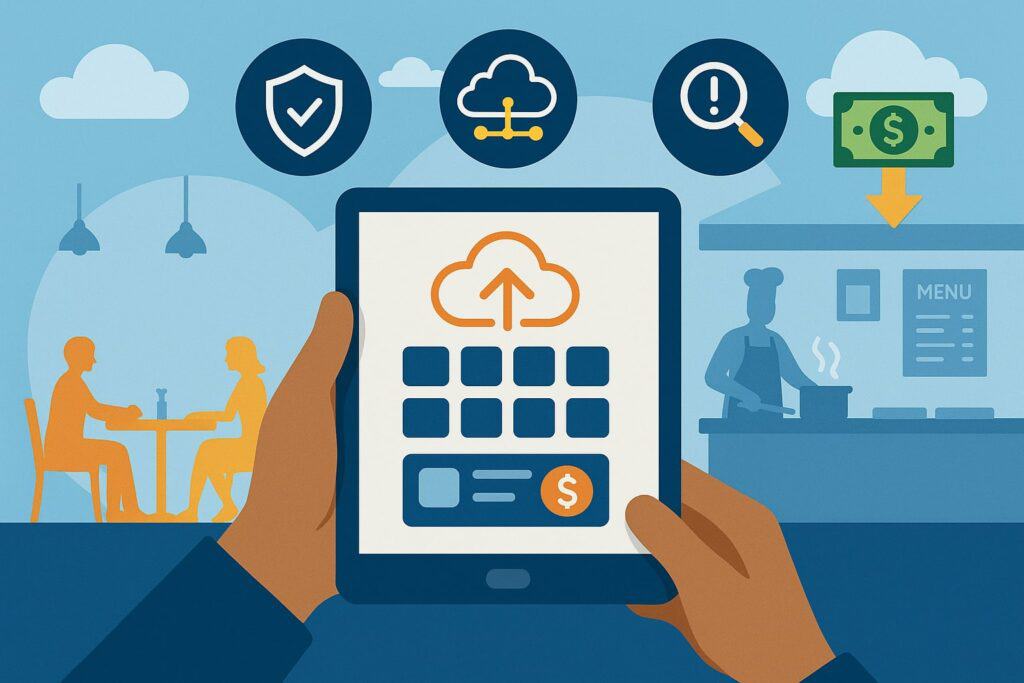
Data security in cloud restaurant POS systems differs from old on-site POS deployments in three big ways. First, more data travels across public networks. Orders flow from apps, kiosks, and delivery aggregators into the cloud and back down to terminals, printers, and kitchen display systems.
That shift demands modern transport protections like TLS 1.3, certificate pinning for mobile clients, and strong API authentication. Second, software is now a living service. Instead of annual upgrades, your vendor pushes weekly releases, new APIs, and embedded payments features.
That pace is great for innovation but expands exposure if change management, release testing, and rollback plans aren’t mature. Third, ecosystem complexity explodes. A single cloud POS often touches payment gateways, gift card providers, loyalty CRMs, payroll, inventory, and third-party delivery platforms.
Each integration must be governed because data security in cloud restaurant POS systems is only as strong as the weakest connector.
Cloud benefits are real: centralized configuration, faster patches, better uptime SLAs, built-in disaster recovery, and standardized security controls. But operators still own their risk.
You must confirm that cardholder data is tokenized end-to-end, that personally identifiable information (PII) is minimized, and that vendors meet frameworks like PCI DSS v4.0, SOC 2 Type II, and ISO/IEC 27001.
Finally, frontline realities matter: staff churn is high, Wi-Fi changes often, and stores may run aging tablets alongside new smart terminals. Practical policies—least-privilege roles, enforced MFA, kiosk lockdowns, and network segmentation—make data security in cloud restaurant POS systems achievable even in busy, high-turnover environments.
Core Principles: Confidentiality, Integrity, Availability (CIA) Applied to Restaurants
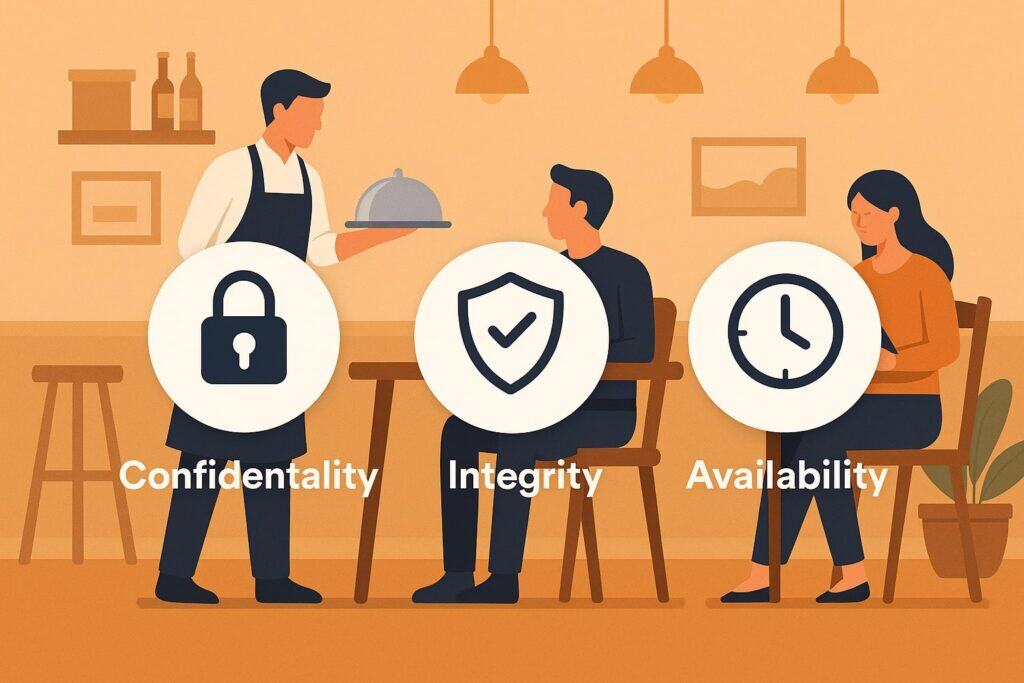
To design data security in cloud restaurant POS systems, align every control to the CIA triad. Confidentiality keeps card and guest data private via tokenization, P2PE, vaulting, and role-based access control.
Integrity ensures orders, prices, and reports can’t be tampered with; use signed updates, database controls, and checksums on menu files and configs.
Availability keeps service running during rush, storms, or cyber events; architect for multi-AZ cloud redundancy, local offline modes, and automatic failover to cellular or backup payment rails.
Start with data mapping. Identify every data class—PANs, tokens, gift card numbers, loyalty IDs, phone numbers, and employee SSNs. For data security in cloud restaurant POS systems, apply the principle of data minimization: only collect what you need, keep it only as long as policy requires, and tokenize wherever possible.
Then layer identity and access controls: centralized SSO, mandatory MFA for managers and admins, and granular RBAC so cashiers can take payments but can’t export reports. Build observability early: forward POS logs, API calls, and auth events to a SIEM for correlation and alerts.
Finally, practice resilience: define RTO/RPO targets for stores, ensure nightly backups are encrypted with customer-managed keys, and test disaster recovery playbooks quarterly so availability supports peak service.
Encryption, Tokenization, and P2PE: The Non-Negotiables
Encryption at rest and in transit is table stakes for data security in cloud restaurant POS systems. Use TLS 1.3 with modern cipher suites and disable legacy protocols. For storage, enable disk-level encryption, database-level encryption, and application-level crypto for sensitive fields.
But the real lift comes from tokenization and point-to-point encryption (P2PE). With tokenization, PANs are replaced with provider-specific tokens immediately after capture; tokens are useless if stolen, shrinking PCI scope dramatically.
P2PE encrypts card data within the hardware reader before it ever touches your POS app, keeping raw PANs out of memory and logs.
Choose hardware that supports secure reading and exchange (SRED) and validate that key injection, key rotation, and tamper resistance meet industry standards.
For data security in cloud restaurant POS systems, ask vendors about HSM-backed key management, FIPS 140-3 validation, and customer-managed keys (CMK) options. Ensure gift cards and stored-value numbers also receive tokenization, as thieves target them due to weaker controls.
Don’t forget backups and exports: enforce server-side encryption for S3-style object stores, require client-side encryption for any manual downloads, and scan for secrets in CSVs. The result is layered protection where a breach of one control does not expose primary account numbers or guest PII.
Identity, Access, and Zero Trust for High-Turnover Teams
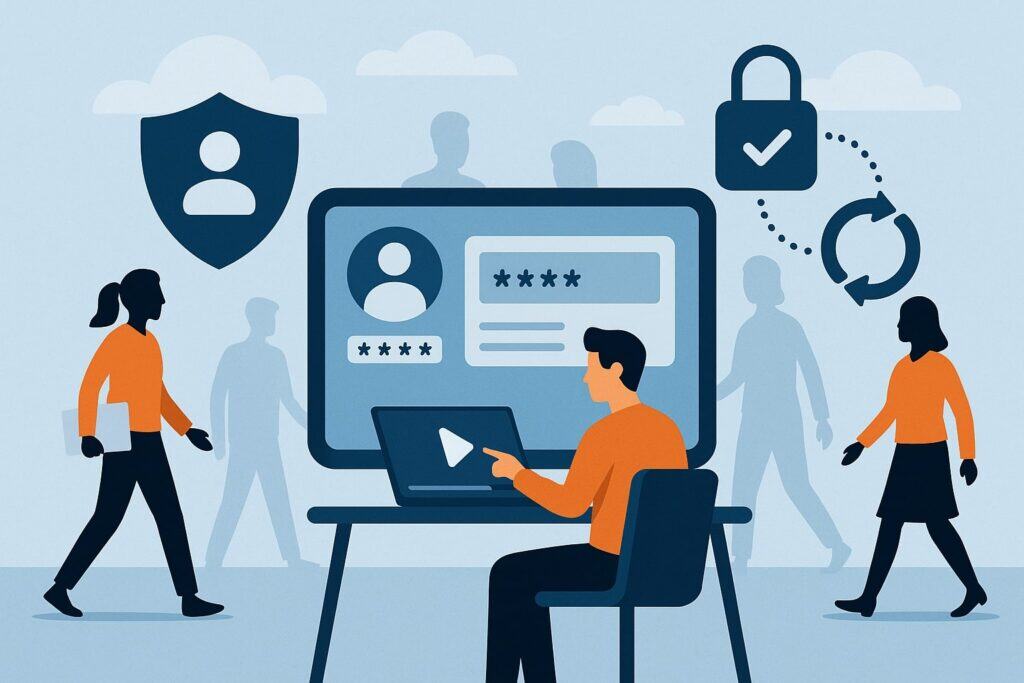
Staff turnover and shared tablets can quietly undermine data security in cloud restaurant POS systems. The fix is identity discipline. Start with SSO so corporate and store roles live in one directory.
Mandate multifactor authentication for privileged actions: refunds above a threshold, price overrides, cash drawer openings, and end-of-day exports. Use hardware-backed passkeys for managers to reduce OTP fatigue.
Implement least privilege with RBAC profiles: cashier, shift lead, manager, franchise owner, and auditor—each permissioned to the minimum necessary.
Adopt the Zero Trust mindset: never trust, always verify. Session policies should re-prompt MFA for risky actions and disallow access from rooted/jailbroken devices.
For data security in cloud restaurant POS systems, require device posture checks for back-office laptops: disk encryption on, OS up to date, EDR healthy. Rotate credentials automatically when employees leave; integrate HRIS events to disable accounts on the same day.
Replace shared PINs with individual codes tied to named identities and auto-expire them. For vendor access, use just-in-time (JIT) privilege elevation, time-boxed support windows, and auditable break-glass procedures.
Network Segmentation, Store Wi-Fi, and Secure Remote Access
Even in a cloud model, store networks matter for data security in cloud restaurant POS systems. Segment the POS VLAN from guest Wi-Fi and IoT devices (cameras, TVs, music players).
Block east-west traffic and restrict outbound ports so terminals only reach approved domains via DNS filtering and egress controls. Use WPA3 for wireless, rotate pre-shared keys regularly, and consider 802.1X for corporate SSIDs where feasible.
Provide resilient transport. Prefer dual-WAN routers with automatic failover to LTE/5G to sustain card acceptance during ISP outages. Use a lightweight ZTNA client or secure reverse proxy for remote support instead of legacy VPNs.
For data security in cloud restaurant POS systems, deploy a cloud WAF and bot protection on web ordering endpoints, rate-limit APIs, and require signed webhooks from delivery partners.
Monitor DNS and firewall logs centrally; alerts for command-and-control callbacks or unusual POS traffic should page your on-call within minutes, not hours.
Compliance Essentials: PCI DSS v4.0, SOC 2, and Privacy Laws
Compliance does not equal security—but it’s a powerful baseline for data security in cloud restaurant POS systems. PCI DSS v4.0 emphasizes customized approaches, continuous testing, and stronger authentication.
Operators should align with a SAQ type that fits their architecture; many cloud POS deployments aim for SAQ P2PE or SAQ A-EP depending on scope.
Validate that your provider maintains PCI DSS certification for both the application and the payment gateway, and that your specific hardware readers are part of a validated P2PE solution. Ask for attestation of compliance (AOC) and the responsibility matrix clarifying who handles which PCI controls.
SOC 2 Type II reports demonstrate operational controls over time. For data security in cloud restaurant POS systems, a recent SOC 2 covering Security, Availability, and Confidentiality adds assurance around change management, incident response, and access reviews.
ISO/IEC 27001 certification shows an information security management system is in place and audited. Privacy statutes also apply: GDPR for EU guests, CCPA/CPRA for California consumers, and other state laws require transparent notices, opt-outs, purpose limitation, and secure deletion.
Keep a data retention schedule: purge old logs, redact exports, and rotate tokens for dormant accounts. Document a vendor risk program that reviews DPAs, sub-processors, and breach notification clauses so compliance strengthens your entire ecosystem.
Secure SDLC, Patch Hygiene, and Continuous Testing
Cloud velocity means change is constant, so data security in cloud restaurant POS systems depends on a secure software development lifecycle (SDLC). Embed threat modeling into feature design: what data is touched, which APIs are exposed, and how could a malicious actor abuse this flow?
Automate code scanning (SAST), dependency scanning (SCA), and container image scanning before building a ship. Use signed artifacts and enforce deploy-time admission controls for Kubernetes or serverless runtimes.
Maintain a fast patch pipeline for OS, firmware, and third-party libraries; many breaches start with old plugins on web ordering portals.
Continuous assurance beats annual pen tests. Schedule external ASV scans, quarterly penetration tests that include API abuse cases, and red team exercises that simulate credential theft at stores.
For data security in cloud restaurant POS systems, unit test security controls: does the refund threshold truly block unprivileged roles? Are logs redacting PANs and tokens? Are secrets vaulted and rotated with short TTLs?
Track security debt with SLAs, and declare severity levels that drive real response timelines. A robust SDLC keeps innovation safe without slowing the release cadence that restaurants value.
Data Governance, Observability, and Incident Response That Actually Works
Good governance turns scattered controls into a coherent defense for data security in cloud restaurant POS systems. Start with a data inventory and classification policy. Label datasets as Public, Internal, Confidential, or Restricted, and apply controls accordingly.
Use DLP rules to prevent exporting customer or employee PII to unmanaged destinations. Encrypt backups and verify restorations monthly; backups that fail to restore are liabilities, not protections.
Observability is your early warning system. Centralize logs from POS apps, payment terminals, gateways, WAF, firewalls, identity providers, and endpoint tools into a SIEM. Define detections for suspicious refunds, mass report exports, API spikes from new IPs, and failed MFA storms.
For data security in cloud restaurant POS systems, enrich alerts with store numbers, devices, and shift data so responders know what’s happening on the ground.
Build runbooks that guide on-call staff: isolate a terminal, rotate tokens, revoke sessions, and switch to offline EMV if needed. Run tabletop exercises each quarter—simulate a credential leak, a POS malware alert, or a delivery-partner webhook compromise.
Backup Strategy, RTO/RPO, and Business Continuity in the Dinner Rush
Availability is the “A” in CIA and the lifeblood of data security in cloud restaurant POS systems. Design for failure. Use multi-region cloud deployments with automatic failover for order ingestion and payment authorization.
At the store level, ensure terminals can queue transactions offline with EMV fallback and later re-tokenize once connectivity returns. Define RTO (time to restore) and RPO (data loss tolerance) based on service peaks; for many quick-service restaurants, RTO < 30 minutes and RPO < 5 minutes are realistic targets.
Backups should be immutable, versioned, and encrypted with customer-managed keys. Test restores for databases, config stores, and even menu images.
For data security in cloud restaurant POS systems, maintain a crisis communications plan: templated notices for franchisees, guidance for managers on accepting payments during outages, and a dedicated status page for transparency.
Finally, measure resilience continuously. Track failover drills, mean time to detect (MTTD), and mean time to recover (MTTR). Strong continuity planning translates security into smooth operations when it matters most—during a packed Friday dinner rush.
Vendor Due Diligence and Shared Responsibility in the POS Ecosystem
The cloud is a shared responsibility model, and data security in cloud restaurant POS systems relies on knowing where your duties end and your vendor’s begin.
Start with a standardized questionnaire that covers PCI scope, SOC 2, ISO 27001, encryption practices, key management, breach history, and sub-processor transparency.
Request recent AOCs and SOC 2 Type II reports, then verify scoping details—are all production systems included, or only select services? Map responsibilities for log retention, vulnerability management, and incident notification timelines.
Assess integration risk. Every delivery aggregator, loyalty platform, or payroll system connected to your POS becomes part of data security in cloud restaurant POS systems.
Require API keys with least privilege, rotate credentials, and demand signed webhooks with replay protection. For support access, insist on JIT elevation, session recording, and IP allowlisting. Negotiate contractual SLAs for security incidents and data deletions after contract termination.
Finally, measure vendor performance yearly with scorecards and issue remediation plans for gaps. Treat your ecosystem like an extension of your business, because from an attacker’s perspective, it is.
Practical Store-Level Controls that Make a Big Difference
Not every control requires a big budget. Some of the best wins for data security in cloud restaurant POS systems are simple, repeatable habits. Physically secure terminals: anti-tamper stands, cable locks, and routine inspections for skimmers.
Lock down tablets to kiosk mode so staff can’t install random apps. Use auto-logout and short session timeouts on shared devices. For refunds and voids, require manager approval with step-up MFA and capture reason codes to deter misuse.
Train for basics: how to spot phishing, what a fake support call sounds like, and why USB devices should never be plugged into POS hardware.
For data security in cloud restaurant POS systems, post quick reference cards at registers with incident hotlines and “if you see something, say something” escalation steps. Run surprise drills—like a suspicious USB drop—to keep awareness high.
Enforce patch windows outside peak hours and confirm store managers know how to verify successful updates. Practical, human-centered controls close the gap between policy and real-world behavior.
A Step-By-Step Roadmap to Strengthen Your Cloud POS Security
It’s easy to feel overwhelmed. Use this pragmatic roadmap to mature data security in cloud restaurant POS systems over 90 days and beyond.
- Days 1–30: Baseline and Quick Wins: Inventory data flows, terminals, APIs, and vendors. Enable TLS 1.3 everywhere, turn on MFA for all privileged roles, segment guest Wi-Fi from POS, and lock tablets to kiosk mode.
Verify tokenization is end-to-end and disable card data logging. Centralize logs from POS, identity, and firewalls into your SIEM and set alerts for top fraud scenarios. - Days 31–60: Hardening and Testing: Roll out RBAC refinements, enforce passwordless or passkey login for managers, and rotate all API keys. Configure WAF rules, rate limiting, and signed webhooks on online ordering.
Schedule ASV scans and a focused external pen test on APIs. For data security in cloud restaurant POS systems, implement backup immutability and test a full restore. Run an incident tabletop that covers offline payment mode. - Days 61–90: Governance and Resilience: Finalize PCI DSS v4.0 responsibility matrix with your vendor. Publish a data retention schedule and delete stale exports. Implement device posture checks for back-office access.
Drill store failover to cellular and measure MTTR. Create a vendor scorecard and remediation plan. Document and socialize runbooks so every manager knows what to do—before an event hits. With a plan like this, data security in cloud restaurant POS systems becomes a durable competency rather than a one-off project.
Metrics That Prove Your Security Program is Working
Executives and franchisees want proof. Choose metrics that reflect real risk reduction for data security in cloud restaurant POS systems. Track MFA coverage (target 100% for admins), RBAC exceptions over time, patch latency for terminals and web apps, and dependency freshness for critical services.
Measure auth attack success rates, API request anomalies blocked by WAF, and the percentage of endpoints passing device posture checks.
From an availability lens, monitor outage minutes per store, successful offline transaction replays, and backup restore success rates. For compliance, follow open PCI findings, SOC 2 observations, and vendor remediation SLAs.
Make these metrics visible. Publish dashboards that store leaders can understand: “How many high-risk events this week?” “How quickly did we contain them?” Celebrate improvements and investigate regressions.
When metrics guide investment, data security in cloud restaurant POS systems aligns security, operations, and guest experience around a shared scoreboard.
FAQs
Q.1: What makes data security in cloud restaurant POS systems different from traditional on-prem POS security?
Answer: Data security in cloud restaurant POS systems emphasizes internet-facing controls, API protection, and continuous delivery hygiene. In the old world, card data often lived on a back-office server and updates were rare.
Today, data flows from mobile apps and delivery partners into cloud services and back to terminals. That means TLS 1.3 everywhere, strict API keys, signed webhooks, and bot mitigation for online ordering.
Zero Trust replaces perimeter trust: every user and device must be verified, every request is least-privileged, and every session is monitored.
Another difference is the speed of change. Your vendor ships updates weekly, so secure SDLC, automated scans, and staged rollouts are essential. Tokenization and P2PE minimize PCI scope compared to legacy swipe flows.
Finally, availability design shifts from UPS-protected back rooms to multi-region cloud services plus store-level offline EMV and LTE failover. Get these elements right and data security in cloud restaurant POS systems can exceed the safety of many on-prem installations while delivering better resilience and agility.
Q.2: How do I evaluate a POS vendor’s security posture before signing?
Answer: Start by asking for a current PCI DSS AOC, a SOC 2 Type II report, and an ISO/IEC 27001 certificate. Request a shared responsibility matrix clarifying which PCI controls the vendor owns versus your team.
Probe their key management (HSM usage, FIPS 140-3 validation), tokenization model, and P2PE validation for supported hardware. For data security in cloud restaurant POS systems, verify they enforce TLS 1.3, rotate secrets automatically, and support SSO/MFA with granular RBAC.
Assess operational maturity: change management, rollback plans, incident response SLAs, and breach notification timelines. Review their sub-processor list and require signed webhooks, IP allowlisting, and rate limiting on APIs.
Finally, run a limited technical due diligence: have your security team inspect API documentation, test sandbox endpoints, and review example logs to ensure sensitive fields are redacted.
A vendor that treats data security in cloud restaurant POS systems as first-class will be transparent, responsive, and able to demonstrate controls with evidence—not just slideware.
Q.3: What are the must-have store-level controls to protect a cloud POS?
Answer: For practical data security in cloud restaurant POS systems, combine simple physical and digital safeguards. Physically secure terminals and inspect for skimmers during opening and closing checklists.
Lock tablets to kiosk mode so no unauthorized apps run. Separate guest Wi-Fi from POS traffic with VLANs and block lateral movement.
Enforce short session timeouts, rotate individual PINs, and require manager MFA for high-risk actions like large refunds. Keep firmware and OS patches current with a scheduled maintenance window outside peak hours.
Train staff to spot phishing and social engineering; attackers often call pretending to be “POS support.” Provide a one-page incident guide—who to call, how to isolate a device, and when to switch to offline EMV.
Ensure a backup internet path (LTE/5G) and test it monthly. With these basics, data security in cloud restaurant POS systems improves quickly without massive capital spend.
Q.4: How do offline transactions fit into a secure cloud strategy?
Restaurants need to serve guests even if the internet blips. For data security in cloud restaurant POS systems, plan for offline EMV with strict risk controls: cap the number and total value of offline authorizations, require manager PIN for overrides, and re-tokenize queued transactions immediately after reconnection.
Encrypt offline batches at rest, sign them to prevent tampering, and ensure your reconciliation jobs flag declines for follow-up. Maintain clear procedures for cash fallback and guest communication during outages.
When engineered thoughtfully, offline mode preserves availability without compromising data security in cloud restaurant POS systems.
Conclusion
Strong data security in cloud restaurant POS systems is not just compliance—it’s operational excellence that protects revenue, guest trust, and brand reputation. By prioritizing tokenization and P2PE, enforcing Zero Trust identity, segmenting networks, hardening APIs, and practicing real incident response, you transform risk into resilience.
Align with PCI DSS v4.0 and SOC 2 to structure your program, but go beyond checklists with continuous testing, meaningful metrics, and store-friendly procedures.
Choose partners who share your standards, document shared responsibilities, and hold each other accountable with evidence. Most importantly, make security visible to your teams: simple runbooks, regular drills, and clear dashboards that guide action.
When you approach data security in cloud restaurant POS systems as a living discipline—iterated weekly like your menu and service—you gain speed and safety together.
That combination lets you roll out new channels, embrace innovative guest experiences, and weather inevitable disruptions with confidence. In a market where trust drives loyalty, the restaurants that lead on security will lead on growth.