By cloudrestaurantmanager October 11, 2025
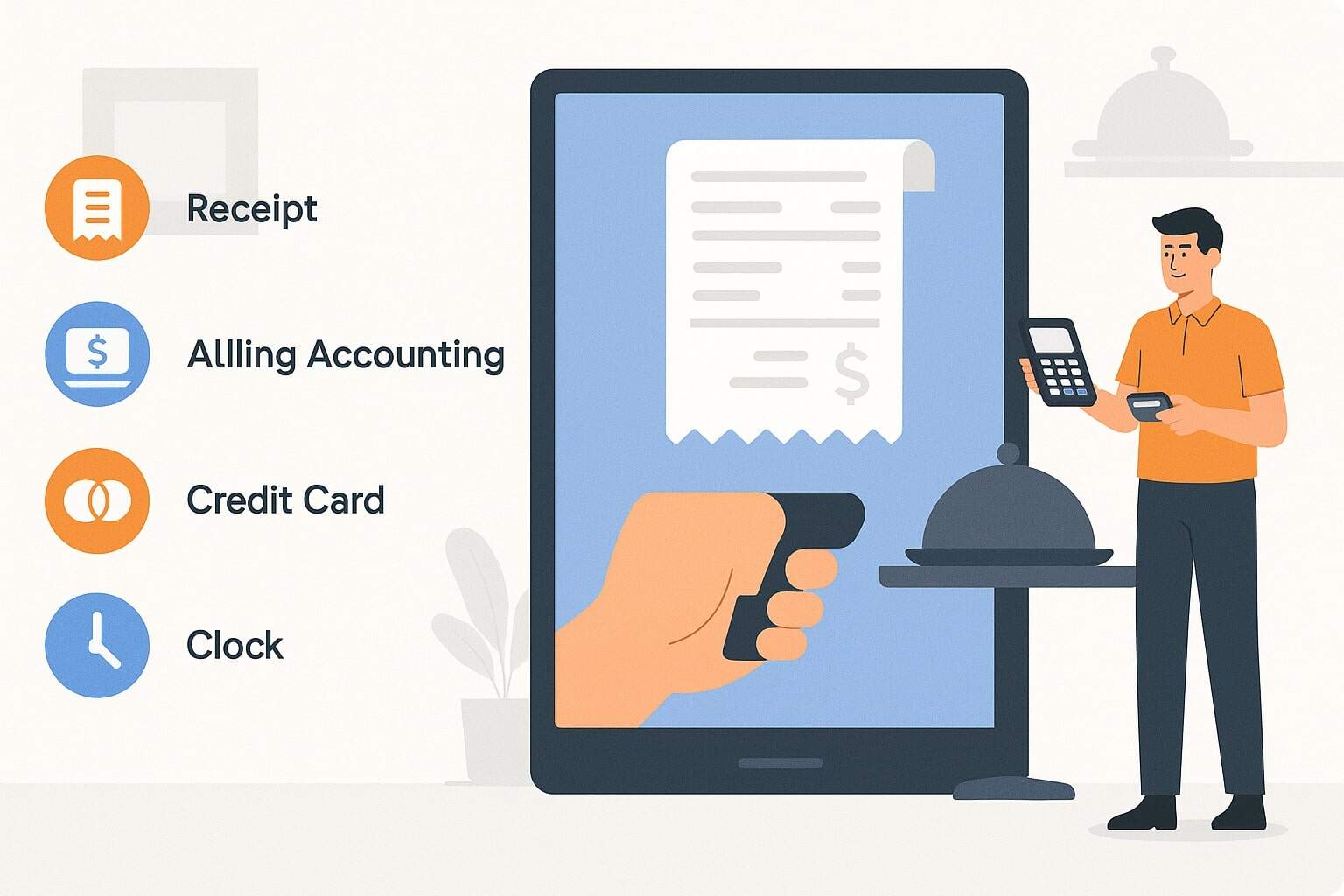
Billing solutions for restaurants are the backbone of modern hospitality operations. From quick-service counters to full‑service dining rooms, the right tools unify ordering, payments, reconciliation, and reporting so teams can move fast without errors.
This 2025 guide explains how billing solutions for restaurants reduce friction across the guest journey, tighten cash flow, and improve compliance. You’ll learn how integrated POS systems, mobile wallets, QR ordering, SoftPOS tap‑to‑pay, and automated invoicing connect front‑of‑house and back‑office workflows.
We’ll also cover emerging standards, omnichannel use cases like catering and online ordering, and practical steps for selection, implementation, and optimization. Throughout, we keep the focus on measurable outcomes: faster table turns, lower chargebacks, fewer comps, and higher tips—without sacrificing security or guest trust.
Why Billing Solutions for Restaurants Matter in 2025
Billing solutions for restaurants have evolved from simple card terminals into end‑to‑end payment platforms. Today’s diners expect contactless, split payments, pay‑at‑table, and digital receipts as defaults.
Operators need unified reporting that merges on‑premise, curbside, delivery, and catering revenue in one ledger. When billing lives inside the POS with real‑time menu sync, taxes, surcharges, and service fees are calculated consistently—cutting manual fixes and staff frustration.
Equally important, billing solutions for restaurants directly influence customer experience. Long waits at the host stand or a single terminal at the bar create bottlenecks that tank satisfaction scores.
By enabling tableside checkout, QR‑code ordering, and guest‑initiated payments, managers speed the last mile of service and turn tables faster. Modern systems also support stored cards, gift cards, and loyalty redemptions in one flow, so guests don’t juggle apps.
Finally, billing solutions for restaurants protect margins. Interchange optimization on eligible cards, automatic tip adjustment rules, and built-in fraud tools reduce leakage. With role‑based permissions and audit logs, owners can spot anomalies in comps, voids, and refunds.
As regulatory expectations climb and PCI requirements update, integrated tokenization and point‑to‑point encryption (P2PE) keep sensitive card data out of scope—lowering risk while maintaining agility.
Core Components of Modern Restaurant Billing
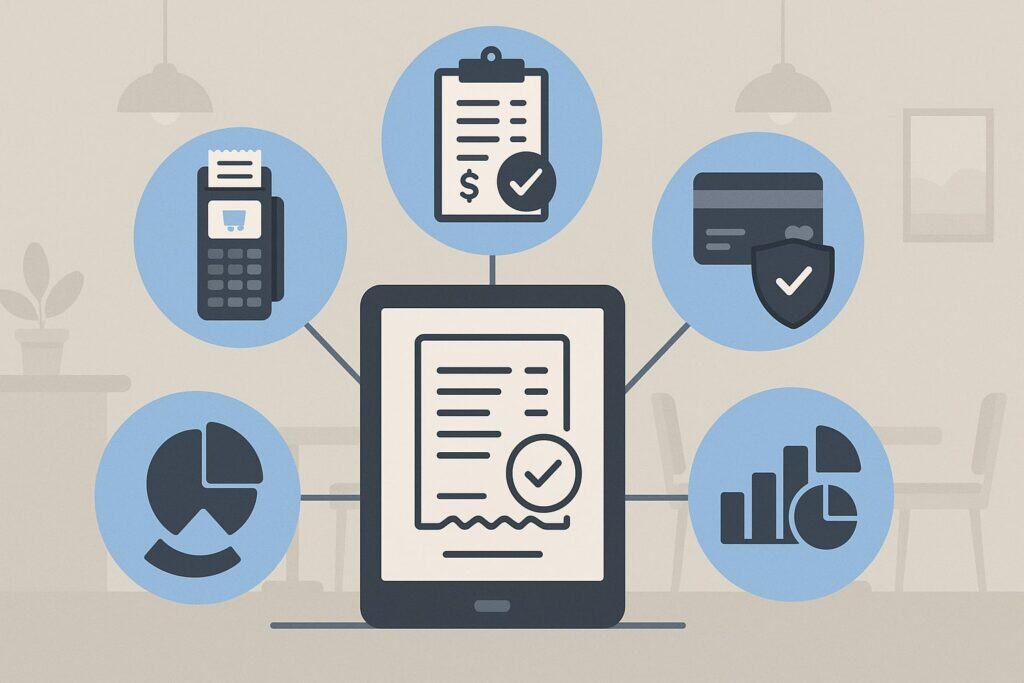
Billing solutions for restaurants typically combine hardware, software, and processor services. First, the POS layer handles menu items, modifiers, taxes, and service charges. It pushes orders to the kitchen display system (KDS) and listens for status updates that drive pacing and check management.
Second, the payments layer secures card‑present and card‑not‑present transactions across EMV chip, contactless NFC, magstripe (where still used), and digital wallets like Apple Pay and Google Pay.
Third, the gateway/processor handles authorization, settlement, batching, and funding timelines while exposing tokenization and dispute data.
A strong architecture for billing solutions for restaurants includes pay‑at‑table terminals, handhelds for servers, counter devices for QSR, and unattended kiosks.
On the software side, must‑have features are offline mode, split checks by seat or item, service charge logic, auto‑gratuity for large parties, and real‑time tax rate updates.
For back‑office efficiency, look for automated reconciliation that maps batches to bank deposits, granular roles/permissions, and exportable journals for your accounting platform.
Lastly, integrations expand what billing solutions for restaurants can do. Demand native links to online ordering, delivery marketplaces, reservations, waitlists, loyalty, gift cards, inventory, labor management, and CRM.
Use webhooks or APIs to push daily summaries into your data warehouse. If you operate multiple concepts, multi‑location management and item‑level controls allow brand‑specific pricing while preserving enterprise oversight.
Payment Methods Guests Expect (and How to Support Them)
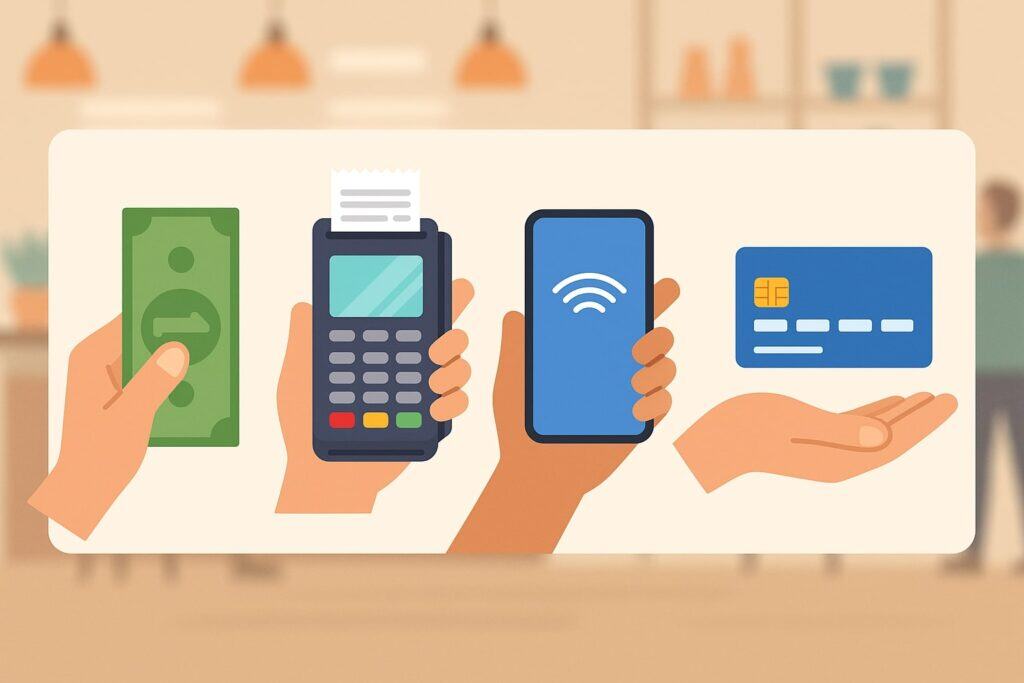
Billing solutions for restaurants must support fast, flexible methods without compromising security. Card‑present EMV remains core, but contactless NFC has become table stakes.
Enable one‑tap checkout on handhelds and counters, plus SoftPOS on compatible phones and tablets for pop‑ups, patios, and food trucks. For self‑serve and bars, QR pay links give guests the freedom to pay when they’re ready, reducing crowding at terminals.
Digital wallets and installments are rising in hospitality. Billing solutions for restaurants should accept Apple Pay, Google Pay, and domestic wallet schemes where applicable.
Where legal and appropriate, consider BNPL or pay‑in‑4 for catering deposits and event packages; be sure your processor can mark these transactions correctly for dispute management. Gift cards—both physical and e‑gift—need tight integration so balances, promotions, and breakage reporting are accurate across channels.
Don’t overlook ACH and invoicing for catering and corporate accounts. Good billing solutions for restaurants offer branded invoices with click‑to‑pay links, supporting ACH, cards, or RTP/instant payout options for faster settlement.
For international tourists, DCC (dynamic currency conversion) and language/localization on receipts can lift conversion—if enabled thoughtfully and transparently. The goal is the same across methods: remove friction while keeping costs predictable and data secure.
Security, Compliance, and Risk Management
Security is non‑negotiable for billing solutions for restaurants. Prioritize EMV, contactless, and end‑to‑end encryption so card data never touches your network in the clear. Tokenization protects stored credentials for tabs, online ordering, and loyalty wallets.
Role‑based access, strong passwords, and MFA reduce internal risks. Apply least‑privilege principles so cashiers can’t alter tax rates or refund limits.
Compliance frameworks continue to evolve, and billing solutions for restaurants should make adherence easier, not harder. Work with providers that simplify PCI scope through P2PE and deliver SAQ guidance, logging, and vulnerability management.
For surcharge or service‑fee models, ensure your tools enforce state and card‑brand rules: clear signage, receipt disclosures, and correct caps. If you serve alcohol, integrate age‑verification where required to avoid fines.
Risk management in billing solutions for restaurants covers more than fraud. Disputes and chargebacks can erode margins and morale. Choose platforms with alerts for high‑risk indicators (mismatched signatures on big tickets, repeated declines, unusual refund patterns) and guided workflows to submit compelling evidence.
For delivery channels, pair AVS and CVV checks with address validation to cut friendly fraud. Finally, lock down data retention, backups, and disaster recovery so your locations stay resilient during outages.
POS, KDS, and Back‑Office Integration
The real power of billing solutions for restaurants appears when POS, KDS, and accounting are aligned. Menu changes should flow automatically to handhelds, kiosks, and online menus. KDS statuses—firing, ready, fulfilled—should inform pacing and guest notifications.
When a check closes, the billing system should instantly map revenue, tips, discounts, taxes, and fees to the correct GL codes, reducing end‑of‑day balancing from hours to minutes.
Inventory and labor links sharpen cost control. Billing solutions for restaurants that send sales by item and daypart to inventory tools help operators calculate theoretical vs. actual food cost, spot waste, and set prep lists.
Labor systems need sales per labor hour and tip distribution data to support fair, compliant payroll. With centralized data, multi‑unit brands can compare performance across locations, standardize best‑selling modifiers, and tune pricing without guesswork.
Finally, exports and APIs keep you in control. Billing solutions for restaurants should offer scheduled reports, webhooks for deposits and disputes, and a clean API for your BI stack.
If you run catering or events, integrate invoicing and deposits so accounting sees AR status in real time. The tighter your integrations, the fewer manual errors—and the faster you can act on trends.
Pay‑at‑Table, QR Ordering, and SoftPOS in Practice
Hands‑on checkout models are transforming the dining room. Pay‑at‑table terminals let servers present the bill, accept contactless or chip, and print or text a receipt without leaving the guest.
That saves steps, keeps cards in sight, and lifts tips because the service rhythm is uninterrupted. Billing solutions for restaurants that support digital tipping prompts and split‑by‑seat make complicated checks painless.
QR ordering and guest‑initiated pay streamline casual and outdoor service. Place scannable codes on tables so guests can browse menus, open tabs, and pay when ready. Billing solutions for restaurants should tie QR orders to the POS and KDS to prevent duplicate tickets and ensure kitchen pacing stays sane.
With SoftPOS, managers can turn any compatible smartphone into a secure tap‑to‑pay device—ideal for patio expansions, pop‑ups, and festivals—no extra hardware required.
These models also unlock new data. By linking QR sessions to loyalty IDs, billing solutions for restaurants give you richer visit histories and feedback loops. You can test menu photos, dynamic specials, and upsell prompts without reprinting anything.
Combined with geo‑fenced offers and waitlist integrations, the check goes from static to smart, driving higher average order value while cutting friction to zero.
Fees, Interchange, and Cost Control
Controlling acceptance costs is essential. Interchange—the base fee set by card networks—varies by card type, entry method, and data quality. Billing solutions for restaurants can reduce costs by encouraging contactless or chip over keyed entry, capturing full data elements, and batching consistently.
Ask your provider about small‑ticket optimizations for QSR, tip tolerance settings, and address verification on higher‑risk card‑not‑present orders.
Surcharging and service fees are sensitive but sometimes necessary. Billing solutions for restaurants should enforce jurisdictional rules and card‑brand policies automatically, including caps and receipt disclosures.
If you use cash discounting, ensure signage is clear and the math is accurate to avoid confusion. For catering, consider ACH pricing for large invoices; it’s often far cheaper than cards and can settle quickly with the right rails.
Finally, treat statements like a monthly audit. Billing solutions for restaurants ought to provide transparent invoices with processor fees, network assessments, and monthly SaaS broken out.
Tie those to sales by channel so you can calculate true blended cost. If you see growth in card‑not‑present orders, adjust fraud tools accordingly and revisit pricing. Cost control is continuous—not a set‑and‑forget checkbox.
Analytics, Reporting, and Revenue Optimization
Data‑driven decisions separate thriving operators from the rest. Billing solutions for restaurants should deliver real‑time dashboards for sales, tips, discounts, voids, and refunds—filterable by location, daypart, server, and channel.
Track average check, table turn time, and payment method mix to identify bottlenecks. If bar tabs are frequently abandoned, test faster last‑call flows or add a handheld at the patio.
Advanced analytics in billing solutions for restaurants link payments to loyalty and marketing. Segment guests by visit frequency, spend, and preferred items, then run targeted offers that auto‑apply at checkout.
Attribute campaigns to revenue, not just clicks, using payment tokens. With revenue forecasting tied to reservations and weather, staff smarter and prep inventory accurately. The outcome is a virtuous cycle: fewer stockouts, happier guests, and steadier margins.
Exportability matters. Billing solutions for restaurants should let you schedule CSVs, push data to a warehouse, and integrate with visualization tools.
Build alerting for anomalies—spikes in refunds, outlier discounts, or sudden shifts in contactless usage—so you catch issues early. Payment data is operational intelligence; the easier it is to access and trust, the faster you can improve.
Selecting the Right Platform: A Practical Framework
Choosing billing solutions for restaurants starts with clarity on concept, volume, and channels. List musthave use cases (pay‑at‑table, QR ordering, kiosk, online ordering, catering invoices) and rank them by impact.
Estimate peak transactions per hour and concurrency requirements for handhelds and KDS. Identify compliance constraints: surcharging legality, tip pooling rules, and alcohol service checks.
Next, score vendors across five dimensions: reliability (uptime, offline mode), usability (server workflow, manager overrides), extensibility (APIs, app marketplace), economics (fees, hardware, SaaS), and support (onboarding, 24/7 help, field replacement).
Ask for a sandbox and run a day‑in‑the‑life test with your team. Strong billing solutions for restaurants will mirror your service flow with minimal taps and no brittle workarounds.
Finally, plan for growth. Multi‑unit brands need centralized controls, location‑level reporting, and easy device onboarding. If you plan to add drive‑thru or food trucks, ensure SoftPOS and cellular failover are ready.
For catering, confirm invoicing, deposits, and AR live inside the same platform. The best billing solutions for restaurants won’t just solve today’s problems; they’ll unlock tomorrow’s opportunities without a costly replatform.
Implementation: From Pilot to Full Rollout
Even the best billing solutions for restaurants live or die by rollout quality. Start with a pilot location representing your most complex service pattern. Map every touchpoint—from host to kitchen to bar—and rehearse guest flows.
Migrate menu data carefully, test taxes and service fees, and validate tip distribution. Train staff with role‑specific checklists and quick‑hit videos they can revisit during service.
In the first week, station a floor champion to troubleshoot handhelds, QR payments, and split checks. Billing solutions for restaurants should include live logs so managers can see failures and retry offline transactions safely.
After close, run reconciliations and compare to the legacy system to ensure deposits, tips, and GL exports match. For multi‑unit go‑lives, stagger deployments to capture lessons learned. Keep a rollback plan and spare hardware kits on site.
Most importantly, gather guest feedback early—did the new pay‑at‑table flow feel faster; were digital receipts clear; did QR ordering boost dessert sales? Continuous tuning is how billing solutions for restaurants deliver lasting returns.
Omnichannel: Dine‑In, Takeout, Delivery, and Catering
Guests don’t think in channels; they think in moments. Billing solutions for restaurants must unify dine‑in, takeout, delivery, and catering so the brand feels consistent. For takeout, enable curbside payments with contactless on arrival or prepay links that respect tip prompts.
For delivery, integrate marketplace orders directly to POS and settle commissions transparently in reports. For catering, use deposits, milestone invoicing, and digital contracts with secure pay links.
Consistency builds trust. Digital receipts should carry your branding, loyalty hooks, and order details no matter the channel. Gift cards must be redeemable everywhere, with real‑time balance checks.
Billing solutions for restaurants that centralize tokens allow guests to store a card once and use it online, in‑app, or at the table—eliminating checkout friction while boosting repeat visits.
Operationally, align KDS and inventory across channels to prevent over‑promising. Set throttle limits on online ordering during peak dining windows and communicate ETAs clearly. When omnichannel is tightly integrated inside billing solutions for restaurants, you stop firefighting and start orchestrating.
Accessibility, UX, and Guest Trust
Great technology disappears into great hospitality. Billing solutions for restaurants should present uncluttered screens, large tap targets, and readable receipts. Offer multiple tip options and an easy custom field; avoid dark patterns that erode trust.
For accessibility, support screen‑reader friendly receipts, high‑contrast modes, and language toggles where appropriate. Make QR codes legible at a glance and avoid sending guests through endless redirects.
Transparency matters. If you apply a service charge, state what it covers. If you offer surcharging, explain the discount for cash. Billing solutions for restaurants that put clarity first see fewer disputes and better reviews.
Provide obvious options for emailed receipts and simple unsubscribe paths for marketing. The check is the final impression; make it as thoughtful as the welcome.
Future Trends to Watch
Payments never stand still. Expect wider adoption of SoftPOS for seasonal patios and events, richer wallet experiences with stored value and offers, and deeper fraud controls tuned for card‑not‑present delivery orders.
Billing solutions for restaurants will lean into realtime payouts for staff tips, instant funding for operators, and programmable receipts that embed feedback and re‑ordering links.
Data will get smarter. With privacy‑safe tokenization, billing solutions for restaurants can model visit frequency and lifetime value without exposing PII.
Expect more dynamic pricing experiments—happy hours driven by weather or local events—and automated inventory reorders tied to sales velocity. As compliance frameworks evolve, platforms will make PCI and surcharge rules increasingly turnkey so operators can focus on hospitality.
FAQs
Q.1: What are billing solutions for restaurants?
Answer: Billing solutions for restaurants are integrated tools that handle checkout, payments, receipts, and revenue reporting across dine‑in, takeout, delivery, and catering. They combine POS software, payment processing, and back‑office integrations to reduce errors, speed service, and protect margins.
Q.2: How do billing solutions for restaurants reduce costs?
Answer: They optimize interchange by favoring secure entry methods, batch consistently, and support ACH for large invoices. Clear statements, automated reconciliation, and fee controls reveal true blended cost so managers can adjust pricing, fraud tools, or channel mix.
Q.3: What’s the difference between pay‑at‑table and QR pay?
Answer: Pay‑at‑table uses handheld or tabletop terminals for chip, tap, or wallet payments at the guest’s seat. QR pay lets the guest scan a code to review the bill and pay from their phone—ideal for patios and high‑turn tables.
Q.4: Can billing solutions for restaurants handle catering and invoices?
Answer: Yes. The best platforms generate branded invoices with pay links, collect deposits, support ACH or cards, and sync AR status to accounting. They also manage event packages, gratuity rules, and milestone billing.
Q.5: How do billing solutions for restaurants support security and compliance?
Answer: They encrypt card data, use tokenization for stored credentials, support EMV and contactless, and provide tools that simplify PCI requirements. They also enforce surcharge and service‑fee rules with correct disclosures.
Q.6: What metrics should I track?
Answer: Monitor sales by channel, average check, table turns, tip rates, discounts, voids, refunds, and payment method mix. Set alerts for anomalies and export data to your BI tools for deeper analysis.
Conclusion
Billing solutions for restaurants are no longer a back‑office afterthought; they are a strategic lever for guest experience and profitability. By unifying POS, payments, and accounting, operators remove friction, improve accuracy, and gain the real‑time insight needed to staff well and serve confidently.
Whether you run a single bistro or a multi‑unit brand, the path is clear: define the workflows that matter, select a platform that fits your concept, and roll it out with discipline. With the right billing solutions for restaurants, you will turn tables faster, delight guests, and protect margins—today and as the industry evolves.