By cloudrestaurantmanager January 5, 2026
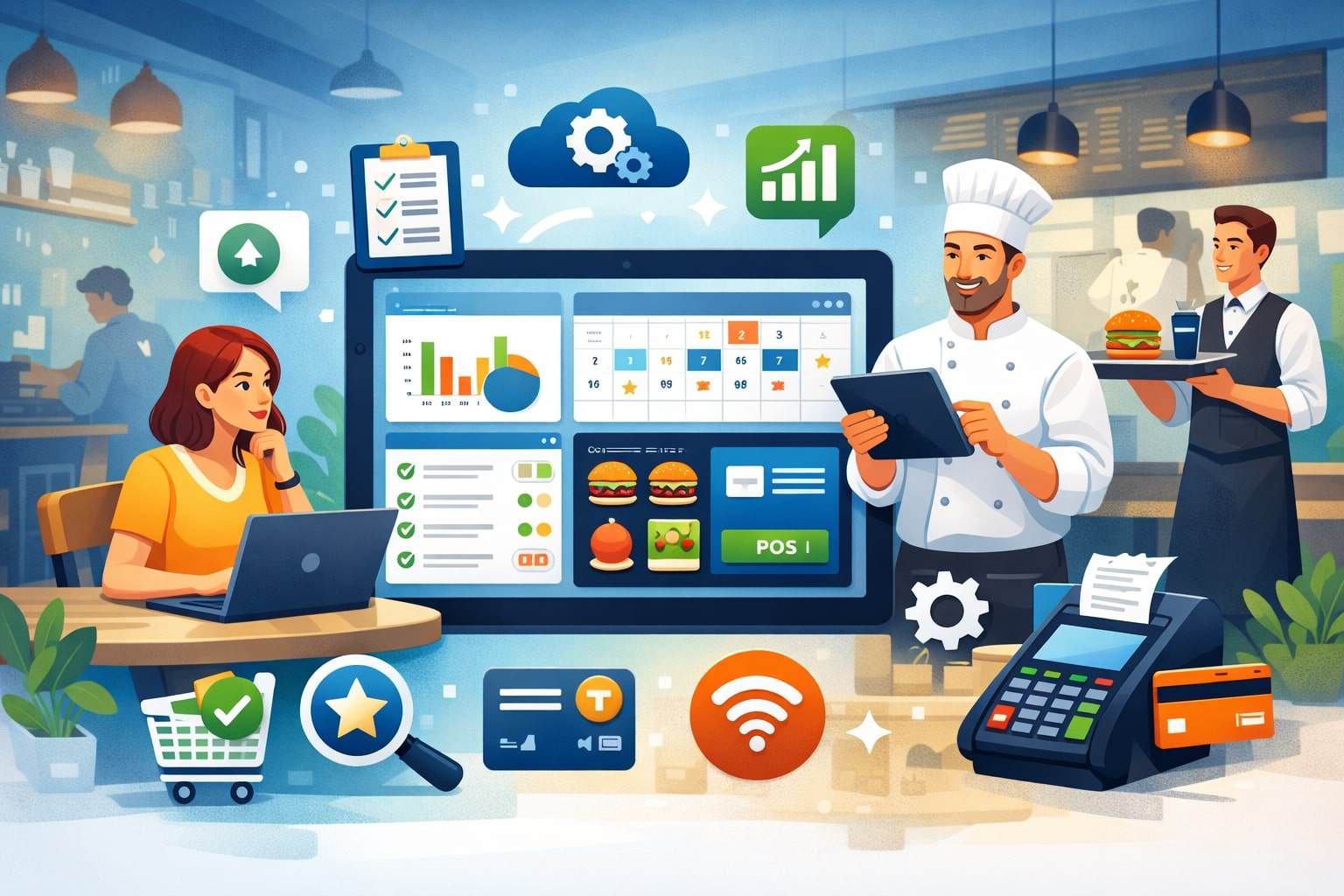
Restaurant management software is no longer “nice to have.” It’s the operational backbone that connects ordering, payments, kitchen execution, inventory, labor, marketing, and reporting into one system.
When restaurant management software is chosen well, it reduces waste, tightens labor, speeds service, and improves consistency across every shift. When restaurant management software is chosen poorly, it creates duplicate work, scattered data, missed tickets, and expensive workarounds.
The challenge is that restaurant management software can mean different things depending on your concept. For a food truck, restaurant management software may be a fast POS with offline mode, simple inventory, and mobile payments.
For a full-service dining room, restaurant management software must support coursing, modifiers, seat management, split checks, and handheld ordering. For multi-location groups, restaurant management software needs centralized menu control, enterprise reporting, role-based permissions, and robust integrations.
Buying restaurant management software is also a timing decision. Guest expectations for speed, takeout, and digital ordering keep rising, and many operators invest in technology to compete and keep up.
Industry research from a major restaurant association has found most operators see technology as a competitive edge, while customer preferences often lean toward tools that make ordering and paying faster.
That’s why a “latest and updated” approach matters: the best restaurant management software in 2026 isn’t only about features, but also about automation, data unification, and flexible channels like pickup, delivery, and on-premise experiences.
This guide walks you through how to evaluate restaurant management software using real operational criteria, modern feature expectations, and future-facing considerations—so you can pick restaurant management software that fits your concept today and scales tomorrow.
What “Restaurant Management Software” Really Includes Today
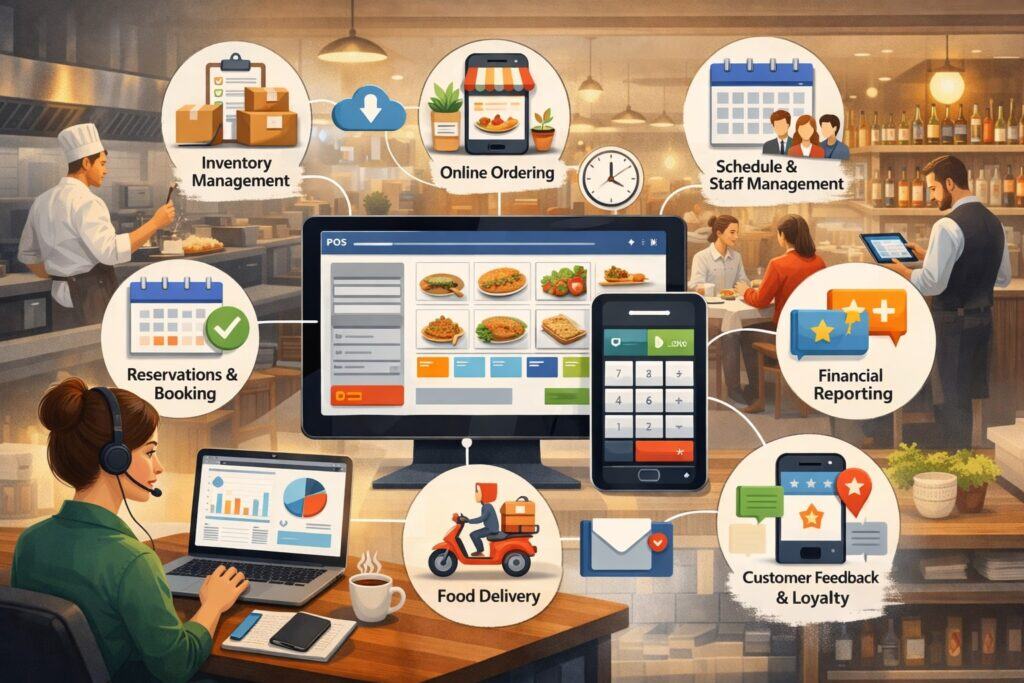
Restaurant management software used to be a basic point-of-sale and a back-office spreadsheet. Now, restaurant management software is typically a platform made of modules that share the same database.
That “single source of truth” is what makes restaurant management software valuable: menu changes update everywhere, item counts match across channels, and labor decisions can reflect real demand.
At the front of the house, restaurant management software often includes POS terminals, handheld devices, table management, reservations (or integrations), and payment acceptance.
For quick service and fast casual, restaurant management software leans heavily on counter workflows, kiosks, QR ordering, and customer-facing displays. In bars, restaurant management software must handle tabs, quick item entry, and high-volume payments.
In the kitchen, restaurant management software usually includes a kitchen display system (KDS), routing rules, prep timing, and order throttling for busy periods. Strong restaurant management software can reduce ticket errors and keep the line organized, especially when online orders surge.
Online ordering is now often baked into restaurant management software or offered through certified partners, because off-premise demand continues to shape operations.
A widely discussed restaurant association report highlighted how takeout has become central to dining habits and how younger customers expect speed, value, and tech-enabled service.
Back-of-house restaurant management software typically includes inventory, recipe costing, purchasing, vendor management, labor scheduling, time tracking, payroll integrations, and analytics.
The most modern restaurant management software also includes marketing automation, loyalty, gift cards, SMS/email, and customer profiles. In short, restaurant management software is not one tool—it’s a connected set of tools that should match how your restaurant actually runs.
Start With Your Concept: Matching Software to Your Service Model
The best restaurant management software for you depends on how guests order, how food is produced, and how money is made. If your service model is counter-based, restaurant management software should prioritize speed: fewer taps, fast modifier entry, easy refunds, and streamlined pickup workflows.
If your service model is table service, restaurant management software must prioritize accuracy: seat-level ordering, coursing, fire timing, and easy check splitting.
Delivery-heavy concepts need restaurant management software that can manage throttling, prep timing, and menu availability across channels. Without strong controls, restaurant management software can create chaos by accepting more orders than the kitchen can execute.
Catering-focused operations need restaurant management software that supports advance orders, deposits, invoicing workflows, and production planning.
Multi-concept groups need restaurant management software that can standardize menu data and reporting across locations while still allowing some local flexibility.
That includes role-based access and audit logs, because inconsistent permissions can create costly mistakes. Franchise models need restaurant management software that supports templates and centralized governance.
Also think about complexity. A simple burger shop can run on lighter restaurant management software than a fine dining restaurant with multi-course tasting menus. When restaurant management software doesn’t match complexity, you either overpay for features you won’t use or underbuy and struggle daily.
The best approach is to map your service model into “must-haves” and “nice-to-haves,” then evaluate restaurant management software against real workflows, not marketing demos.
Core POS Requirements That Separate Great Systems From “Good Enough”
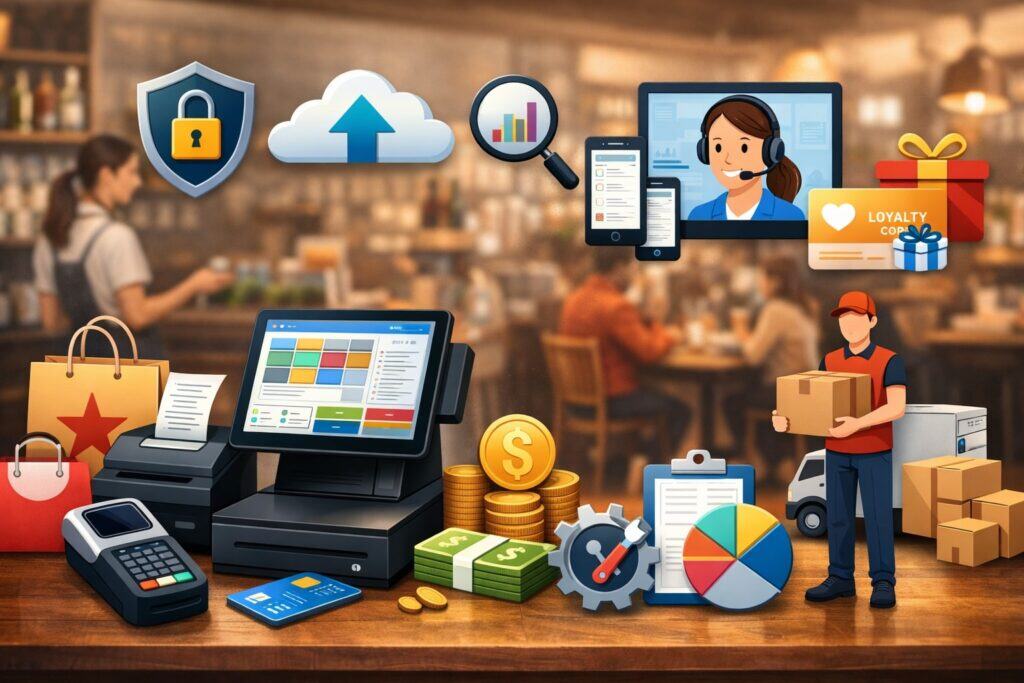
POS is the heartbeat of restaurant management software. If the POS is slow, confusing, or brittle, everything else suffers. Great restaurant management software makes order entry fast and error-resistant.
That means clear modifiers, forced choices where needed, easy up-sells, and smart defaults. Your team should be able to ring a complex order in seconds without thinking.
Reliability matters just as much. Restaurant management software must be stable during rushes, support offline mode (or a resilient fallback), and handle hardware issues gracefully.
Ask how restaurant management software behaves when the internet drops, when a device fails, or when a kitchen screen reboots. Operational downtime is not just an inconvenience—it’s lost revenue and guest frustration.
Payment flow is also central. Restaurant management software should support modern payment types, tips, split tenders, refunds, and chargeback-ready records. For table service, handheld payment can shorten turn times and improve guest experience.
The market is actively innovating in handheld hardware; for example, payment providers have launched phone-like handheld devices designed for mobile order and pay workflows.
Finally, POS reporting must be usable. Restaurant management software should show sales by daypart, category, menu item, and channel. It should also make voids, comps, discounts, and refunds transparent. Great restaurant management software turns the POS into a decision tool, not just a cash register.
Kitchen Display, Ticket Flow, and Execution Controls
Kitchen execution is where restaurant management software either proves its value or exposes its weaknesses. A strong KDS within restaurant management software routes items to the right station, displays modifiers clearly, and supports timing tools like hold-and-fire. It should also handle order promise times, especially for pickup and delivery.
Ticket throttling is a major differentiator in modern restaurant management software. When online orders spike, restaurant management software should help you control volume by adjusting lead times, pausing channels, and limiting items. Without that, the kitchen gets buried, quality drops, and refunds rise.
Look for operational tools inside restaurant management software such as item availability (86ing), prep status tracking, and expo screens. Your front of house should see when orders are delayed, so they can set expectations. Your kitchen should see a clean, prioritized queue, not a messy list of tickets.
Also pay attention to data. Restaurant management software should capture ticket times, make it easy to find bottlenecks, and highlight stations that struggle during certain dayparts. If you can’t measure it, you can’t fix it.
Some vendors publish frequent platform updates and “innovation hub” releases describing new operational improvements and workflow enhancements based on recent merchant usage patterns.
A vendor that updates restaurant management software regularly can be a practical advantage—if the updates are stable and well-supported.
Inventory, Recipe Costing, and Food Waste Reduction
Inventory is where profit is often won or lost. Restaurant management software should track ingredient usage, not just count items in a storeroom.
The most effective restaurant management software supports recipe-level mapping so that every sale impacts theoretical inventory. That’s how restaurant management software helps you spot variance, portioning problems, or theft.
Recipe costing should be easy to maintain. Restaurant management software needs a workflow for updating vendor prices, adjusting yields, and revising recipes without breaking reporting. If recipe costing is too painful, teams stop updating it, and restaurant management software becomes stale.
Purchasing workflows matter too. Restaurant management software should let you create vendor lists, generate purchase orders, and record receiving with minimal effort. Some operations benefit from invoice scanning and automated matching, but even without automation, restaurant management software should reduce manual entry.
Food waste is a growing focus. Restaurant management software can help by tracking waste reasons, timing patterns, and high-variance items. Over time, restaurant management software becomes a forecasting engine: it helps you order smarter, prep the right amounts, and reduce spoilage.
When restaurant management software connects inventory to sales by channel, you can see if delivery promos are driving low-margin items or if certain dayparts create waste spikes.
Labor Scheduling, Time Tracking, and Smarter Staffing With Forecasting
Labor is one of the largest controllable costs. Restaurant management software that treats scheduling as a static calendar misses a major opportunity. Modern restaurant management software increasingly uses forecasting models to predict demand and recommend staffing levels, rather than relying only on manager intuition.
At minimum, restaurant management software should support availability, shift swaps, labor rules, overtime alerts, and time clock controls. It should integrate with payroll or export clean time data.
It should also produce labor percentage reports by daypart and channel, because pickup and delivery patterns can change staffing needs dramatically.
Forecasting is the newer edge. Vendors and workforce platforms increasingly market AI-based scheduling and demand prediction to reduce overstaffing and understaffing.
Industry write-ups discuss how forecasting tools are reshaping scheduling by using sales patterns, events, and external demand signals to recommend labor plans.
Whether you choose an advanced forecasting module or a simpler scheduling tool, your restaurant management software should help managers make faster, more consistent staffing decisions.
In the future, expect restaurant management software to become more “autopilot” for labor: suggested schedules, real-time labor alerts, and automated shift offers when demand exceeds forecast. If your restaurant management software can’t support that direction, you may outgrow it sooner than expected.
Online Ordering, Delivery, and Omnichannel Menu Control
Off-premise is not a side channel anymore. Restaurant management software must support online ordering, delivery integrations, and consistent menus across channels.
The big operational risk is menu fragmentation: different prices, different modifiers, missing photos, or outdated availability. Restaurant management software should help you manage one master menu that can be published everywhere.
Look for channel controls inside restaurant management software. You want the ability to adjust lead times, set order limits, and pause channels without calling support. You also want accurate reporting by channel, so you can see the true profitability of delivery versus pickup versus dine-in.
Customer experience is part of it too. Restaurant management software should support SMS updates, clear pickup instructions, and order accuracy tools. If the online ordering interface is clunky, you lose conversions. If the kitchen gets flooded, you lose repeat business.
Industry research and reporting has emphasized that takeout and drive-thru behaviors are strongly tied to speed, value, and loyalty-driven deals, which makes omnichannel execution and loyalty integration more important than ever.
Restaurant management software that connects ordering with loyalty and marketing can help you protect margins by encouraging direct ordering rather than expensive third-party dependence.
Loyalty, CRM, and Marketing Automation Built for Restaurants
Loyalty is most effective when it is operationally simple. Restaurant management software should make it easy for staff to enroll customers, apply rewards, and handle issues at the register. Guests should be able to earn and redeem across channels without friction.
Beyond points, restaurant management software should support customer profiles, visit frequency, and spend data. That’s what enables segmentation: first-time guests, lapsed guests, high spenders, weekday regulars, and delivery-only customers. With segmentation, restaurant management software becomes a growth engine, not just an operations tool.
Marketing automation is increasingly common inside restaurant management software or through partner ecosystems. Examples include “win-back” campaigns, birthday offers, and post-visit feedback requests. The key is measurement. Restaurant management software should track whether campaigns drive incremental visits, not just clicks.
Reporting and Analytics That Lead to Real Decisions
Restaurant management software is only as valuable as the decisions it enables. Good reporting is fast, clear, and actionable.
Restaurant management software should show you sales trends, top and bottom sellers, modifier performance, labor costs, and channel mix. It should also make it easy to compare periods: week-over-week, month-over-month, and year-over-year.
Menu engineering is a major benefit of strong restaurant management software. You want to see item popularity versus margin, and you want to run tests like price changes or bundle promotions. If restaurant management software can’t easily connect recipe cost to sales, you’ll be guessing at profitability.
Operational analytics matter too: ticket times, order accuracy (refunds and re-makes), and void patterns. Restaurant management software can help you spot training issues or fraud risks when voids spike under a particular login or during a particular shift.
For multi-location operations, restaurant management software should offer centralized dashboards and consistent definitions. “Net sales” should mean the same thing everywhere. Permissions matter here; you don’t want every manager editing category mappings and breaking enterprise reports.
Future prediction: analytics in restaurant management software will become more predictive and prescriptive. Instead of showing only what happened, restaurant management software will increasingly suggest what to do next—like “reduce prep on item X tomorrow” or “add one more cashier from 12–2.”
Integrations: Accounting, Payroll, Reservations, and the Tech Stack Fit
Restaurant management software almost never lives alone. You likely need integrations with accounting, payroll, reservations, online ordering partners, delivery marketplaces, and maybe even specialized inventory or catering tools. The quality of integrations often determines how smooth your day-to-day operations feel.
Start with accounting. Restaurant management software should export clean journal entries, deposits, and fee breakdowns. If you reconcile manually every week, you will feel it. For payroll, restaurant management software should pass accurate hours, tips, and job codes. If you run multiple roles (server, bartender, host), job code accuracy is essential.
Reservations and waitlist tools must sync with restaurant management software or at least integrate smoothly. Your team should see pacing, table status, and guest notes without juggling multiple screens. For delivery, restaurant management software should reduce tablet chaos by unifying orders into one flow.
Ask about APIs and partner ecosystems. Restaurant management software with a strong partner marketplace can give you flexibility as your needs evolve. But beware “integration sprawl.”
Too many disconnected add-ons can break reporting and support. The best restaurant management software strategy is a core platform plus a small number of critical best-in-class tools, all connected with stable integrations.
Security, Compliance, and Data Ownership You Should Not Ignore
Security is not just an IT concern; it’s operational risk. Restaurant management software should support role-based access, unique logins, strong password policies, and audit trails. If every employee shares one POS login, you lose accountability.
Payment compliance is also central. Restaurant management software should support modern payment security standards, EMV, and secure handling of card data.
You should understand whether restaurant management software stores any sensitive data and how it is protected. Ask about encryption, incident response, and security certifications where applicable.
Data ownership matters more than most operators expect. If you leave a vendor, can you export your sales history, customer list, and menu data? Some restaurant management software platforms limit exports or make migration painful. This becomes a big issue when you’ve run loyalty for years and built customer relationships.
Also ask about uptime and support. Cloud-based restaurant management software should have transparent status reporting and clear processes for outages. Even great systems have downtime; what matters is how restaurant management software fails and how quickly it recovers. A vendor that ships frequent updates should also show discipline in stability, release notes, and support documentation.
Implementation, Training, and Change Management
Even the best restaurant management software can fail if implementation is rushed. Your rollout plan should include menu build, modifier logic, tax setup, payment setup, kitchen routing, and staff permissions. Restaurant management software should come with onboarding resources that match your complexity.
Training is where ROI becomes real. Restaurant management software should be intuitive enough for new hires, but you still need structured training for different roles.
Train on workflows that matter: comps, voids, refunds, shift close, tip adjustments, and offline procedures. Most problems with restaurant management software happen during edge cases, not normal orders.
Change management is often ignored. Your team may resist new restaurant management software if it feels like surveillance or added work. The best approach is to explain why you’re changing, how it helps them, and what “good” looks like. Run parallel tests if needed: one shift on training mode, one day of soft launch, then full cutover.
Measure adoption. If restaurant management software includes features like inventory or scheduling but managers keep using spreadsheets, you won’t see benefits. Set clear expectations, give support, and simplify workflows so restaurant management software becomes the default.
Total Cost of Ownership: Pricing, Contracts, and Hidden Costs
Pricing for restaurant management software can be tricky because it often combines software fees, hardware costs, and payment processing economics. Some vendors advertise low monthly fees but require specific processing terms. Others charge more for modules like online ordering, loyalty, or advanced reporting.
To evaluate total cost, build a realistic scenario: number of terminals, number of handhelds, number of locations, expected add-ons, and support tiers. Ask about implementation fees, menu build help, and training. Ask whether restaurant management software charges per location, per device, or per feature.
Hardware matters too. Restaurant management software might require proprietary terminals or allow flexible hardware. Hardware replacement, warranties, and device management can add up.
For mobile workflows, handheld devices can be a strategic investment that pays back through faster turns and fewer errors, but only if restaurant management software supports the workflows well.
Also watch contracts. Some restaurant management software agreements include multi-year terms and early termination fees. Make sure you understand your exit options. If your concept is still evolving, prioritize restaurant management software that gives flexibility to scale up or down without punitive costs.
A Practical Shortlist Process: How to Compare Vendors Without Getting Trapped by Demos
Restaurant management software demos are designed to impress. Your job is to test reality. Start by writing down your top 20 workflows: opening, rush ordering, voiding mistakes, moving tables, splitting checks, applying discounts, handling refunds, pausing online orders, 86ing items, and closing out the day. Then ask each restaurant management software vendor to walk through those exact scenarios.
Request a pilot or sandbox. Put real staff in front of restaurant management software and watch what confuses them. Measure how many taps it takes to ring common orders. Ask how restaurant management software handles modifier mistakes. Ask how quickly you can update a menu across channels.
Check references in your segment. A fine dining operator may love a system that a food truck will hate. Ask how restaurant management software performs during volume spikes, how support responds, and whether reporting matches reality.
Finally, evaluate roadmap and updates. Vendors that actively publish updates and feature releases provide a signal of continued investment in restaurant management software. But frequent updates only help if they are stable, well-documented, and supported.
Future Predictions: Where Restaurant Management Software Is Headed Next
Restaurant management software is moving toward automation, prediction, and “unified commerce.” The next wave is not just more features—it’s smarter orchestration.
Expect restaurant management software to deliver better forecasting for labor and inventory, recommend prep levels, and automatically adjust ordering lead times based on kitchen load.
AI will show up in practical ways. Not as buzzwords, but as tools that reduce manager workload: suggested schedules, anomaly detection for fraud or waste, and smarter customer segmentation.
Industry discussions already highlight AI and forecasting as a major theme in scheduling and workforce efficiency, which will likely expand into other modules inside restaurant management software.
Hardware will also evolve. More handhelds, more kiosks, and more self-service options will push restaurant management software to support flexible ordering.
Some vendors are already launching new handheld devices and unifying POS experiences across device types, which hints at a future where restaurant management software is truly “anywhere” in the restaurant.
Off-premise will remain central, and restaurant management software will keep building controls to protect kitchen capacity and margins. Loyalty will become more personalized. Reporting will become more prescriptive.
The best restaurant management software choices you make today should align with that direction, so you don’t face another major migration in two years.
FAQs
Q.1: What is the most important feature in restaurant management software?
Answer: The most important feature in restaurant management software is reliability paired with workflow fit. If restaurant management software crashes, slows down during rush, or forces awkward workarounds, every other feature becomes irrelevant.
You want restaurant management software that matches your service model and keeps operations stable under pressure.
From there, the “next most important” feature depends on your concept. For delivery-heavy operations, restaurant management software must control pacing and integrate online ordering cleanly.
For full-service, restaurant management software must handle tables, coursing, and payments smoothly. For multi-location groups, restaurant management software must unify reporting and permissions.
A good way to decide is to list your top five pain points and ask how restaurant management software directly removes them. If the vendor can’t show that clearly, the feature list is just noise. The best restaurant management software is the one your team can use correctly on day one and still love after the honeymoon period.
Q.2: Should I choose an all-in-one platform or best-in-class tools?
Answer: All-in-one restaurant management software platforms reduce complexity because modules share data. That means fewer integrations to maintain and more consistent reporting.
For many operators, all-in-one restaurant management software is the simplest route to stable operations, especially when staffing is tight and nobody wants to troubleshoot tech.
Best-in-class stacks can win when you have unusual needs—like advanced catering, complex enterprise inventory, or specialized loyalty. But best-in-class only works if integrations are stable and reporting stays coherent.
Too many add-ons can create “integration sprawl” where restaurant management software becomes a patchwork.
A practical approach is to pick restaurant management software that is strong at your core workflows, then add only the minimum specialized tools you truly need. If you add tools, make sure restaurant management software either has native integrations or a proven partner ecosystem.
Q.3: How do I know if restaurant management software will scale with my growth?
Answer: Scalable restaurant management software supports multi-location controls, centralized menus, consistent reporting definitions, and role-based permissions.
It also offers reliable hardware options and a support model that can handle multiple stores. If you plan to grow, ask how restaurant management software handles enterprise reporting, location templates, and location-level overrides.
You should also ask about roadmap and investment. Vendors that publish frequent updates and new releases can signal ongoing development in restaurant management software. But you should validate that updates are stable and that support can handle issues quickly.
Finally, test scalability in data. Can restaurant management software export clean data? Can you integrate with accounting and payroll at scale? Can you standardize modifiers and routing rules across stores? If the answer is yes, your restaurant management software is more likely to support growth without becoming a bottleneck.
Q.4: What common mistakes do operators make when choosing restaurant management software?
Answer: A common mistake is buying restaurant management software based on a flashy demo rather than real workflows. Demos often show the best-case path.
Real operations include voids, refunds, offline moments, staff turnover, and rush chaos. If restaurant management software isn’t tested in those situations, problems show up after you sign.
Another mistake is ignoring total cost of ownership. Restaurant management software pricing can hide costs in add-ons, hardware, and processing economics. Operators also underestimate training.
Restaurant management software requires role-based training and clear procedures, especially for closing workflows and payment edge cases.
Finally, operators sometimes overbuy. Restaurant management software with dozens of modules sounds great, but if managers keep using spreadsheets, you’re paying for unused potential. Choose restaurant management software that your team will actually adopt, and set a rollout plan that makes adoption realistic.
Q.5: Will AI replace managers in restaurant management software?
Answer: AI will not replace managers, but restaurant management software will reduce repetitive manager workload.
The near-term role of AI in restaurant management software is decision support: forecasting demand, suggesting schedules, highlighting waste, and detecting anomalies. Industry discussions already point to forecasting-driven scheduling and efficiency gains as a key adoption area.
Managers still need judgment for guest issues, coaching, quality, culture, and exceptions. Restaurant management software can surface insights, but humans decide what to do.
Over time, restaurant management software will likely automate more routine actions—like adjusting online lead times or recommending prep changes—while managers focus on leadership and execution.
The best way to prepare is to choose restaurant management software that has a clear roadmap for smarter automation, without making operations dependent on black-box decisions you can’t control.
Conclusion
Choosing restaurant management software is one of the most important operational decisions you’ll make. The right restaurant management software improves speed, accuracy, labor control, and guest experience—while giving you reporting that drives smarter decisions.
The wrong restaurant management software creates friction, hides data, and forces your team into workarounds that cost time and money.
A strong selection process starts with your concept and workflows. Define what “must work” during rush, test real scenarios, and validate reliability.
Make sure restaurant management software supports kitchen execution, inventory discipline, labor control, omnichannel ordering, and usable analytics. Confirm integrations with accounting, payroll, and any tools you already rely on. Understand total cost, contract terms, and data portability.
Finally, think forward. Restaurant management software is moving toward more automation, forecasting, and unified experiences across devices and channels. Vendors are actively shipping new features and hardware to support modern service expectations.
When you choose restaurant management software that aligns with where operations are headed, you protect your investment—and give your restaurant a platform that can grow with you.