By cloudrestaurantmanager January 4, 2026
Running a modern restaurant is no longer just about great food and hospitality. It’s about speed, accuracy, cost control, staffing, guest experience, and real-time visibility—often across multiple locations and sales channels.
That’s why choosing (or building) the right restaurant management platform has become a make-or-break decision for operators.
A strong restaurant management platform is not simply a POS replacement. It’s the operational “brain” that connects front-of-house, back-of-house, online ordering, inventory, labor, guest engagement, and reporting into one coordinated system.
When it’s done right, it reduces waste, improves order accuracy, strengthens margins, helps teams work faster, and gives managers the confidence to act on data—not gut feeling.
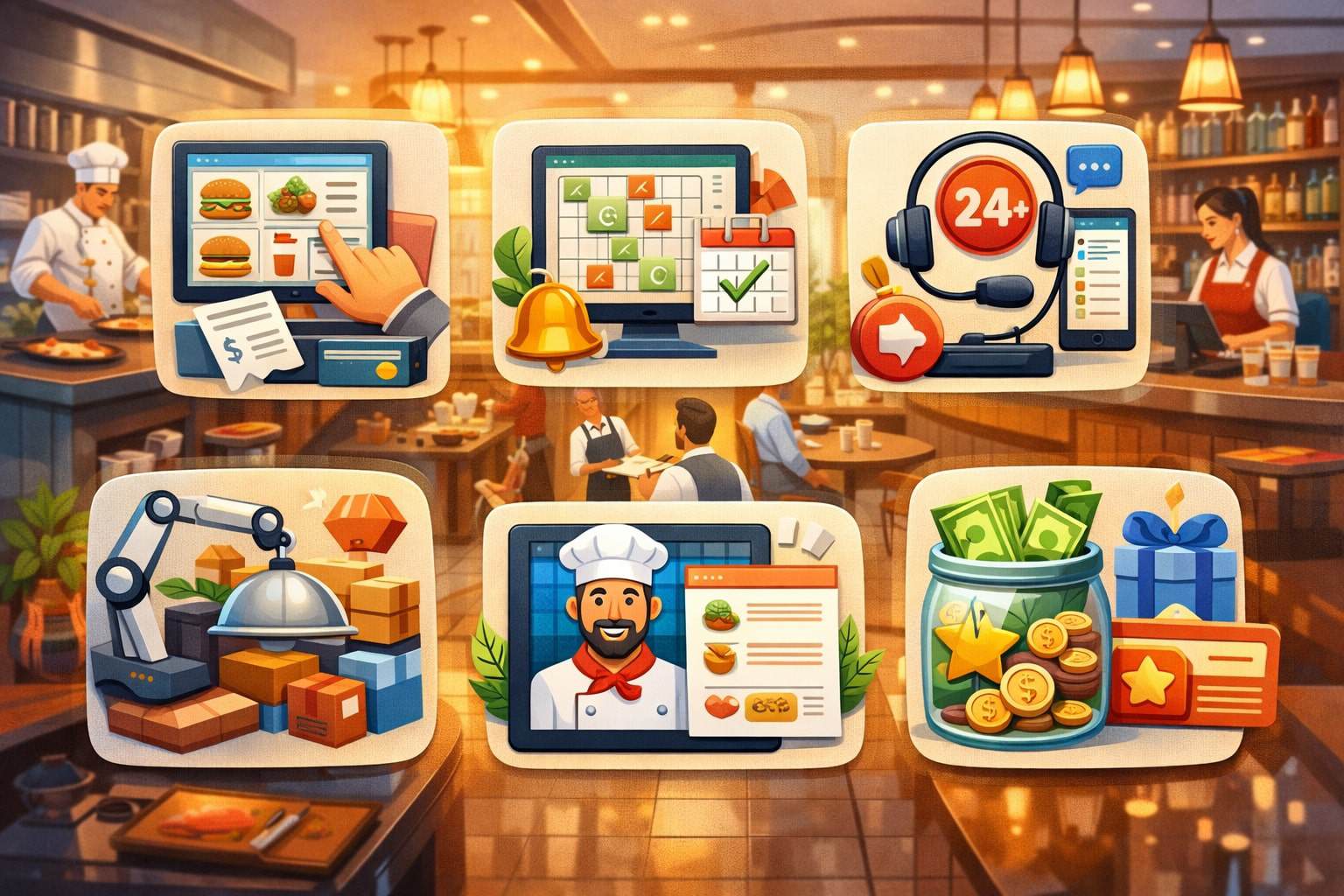
This guide breaks down the key features every restaurant management platform should have, with practical explanations, real-world considerations, and forward-looking predictions so you can invest in a system that stays relevant as restaurant technology keeps evolving—especially with AI, automation, and tighter security requirements becoming the norm.
Unified POS and Multi-Channel Order Management
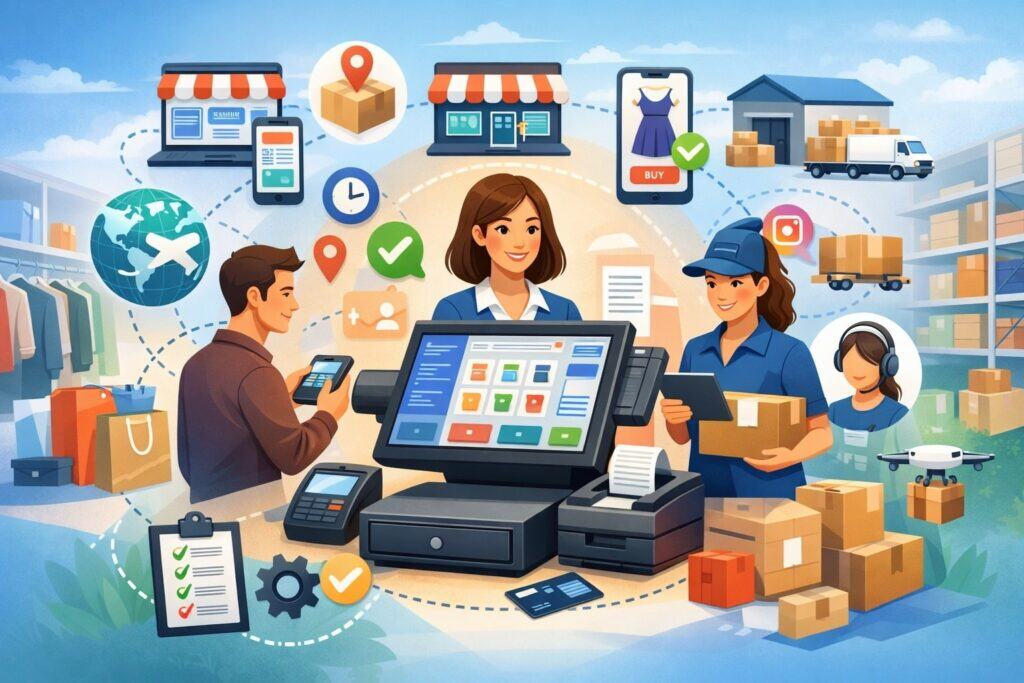
A restaurant management platform must start with a rock-solid POS, but it can’t stop there. Today, a restaurant’s orders come from multiple channels: dine-in, takeout, delivery marketplace tablets, direct online ordering, QR ordering, kiosks, phone orders, and sometimes catering.
If these channels live in separate systems, mistakes multiply—missing modifiers, lost tickets, inaccurate prep times, and inconsistent menu pricing.
A modern restaurant management platform should unify orders into one workflow: a consistent menu, a shared item database, synchronized modifiers, and a single source of truth for order status.
This reduces training time and makes execution predictable during rush periods. It also improves guest satisfaction by reducing “I didn’t get what I ordered” moments.
Look for features like: advanced modifiers, coursing, kitchen pacing, split checks, discounts with rules, open checks with audit trails, item-level void reasons, and role-based permissions.
For multi-location operators, the platform should support centralized menu management with location-level overrides (pricing, availability, taxes, fulfillment options). It should also support future channels—because ordering methods keep changing, and platforms that don’t evolve quickly become expensive bottlenecks.
The future trend is deeper POS + digital ordering integration so that menus, prices, prep times, and guest communication remain consistent across every channel. Integration is increasingly treated as a competitive necessity, not a “nice to have,” because it reduces operational chaos.
Online Ordering, QR Ordering, and Delivery Integration That Actually Works
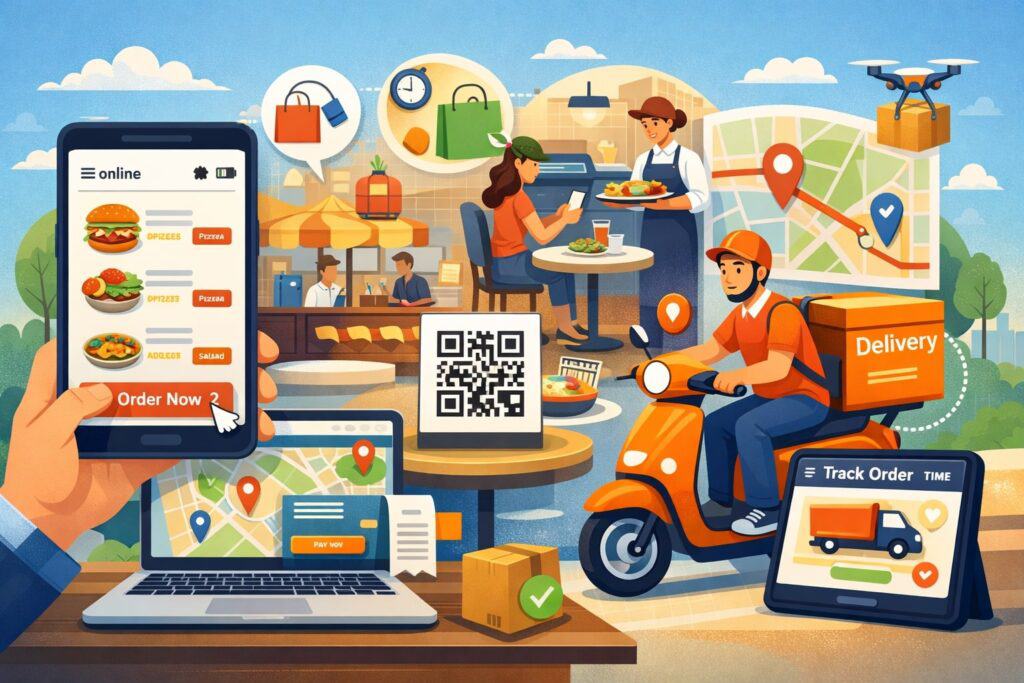
Online ordering is not optional anymore. The question is whether it’s integrated in a way that protects margins and simplifies operations. A strong restaurant management platform should either provide native online ordering or integrate cleanly with a proven ordering solution—without fragile connectors or delayed menu syncing.
Key capabilities include: real-time menu sync, accurate pickup/delivery time estimates, item throttling during peak hours, pickup windows, prep-time rules, and intelligent substitutions when items are out of stock.
If the system supports QR ordering, it should handle table identification, coursing, modifiers, and check management without confusing guests or servers.
Delivery integrations matter too. Even if you use third-party marketplaces, the restaurant management platform should help you manage them: consolidate tickets, normalize modifiers, control item availability, and report profitability by channel.
Some restaurants also need “direct delivery” options with branded ordering and dispatch integrations to reduce commission fees and own the guest relationship.
Operationally, the biggest win is reducing manual re-entry. Manual re-entry creates errors, slows production, and forces staff to become “hu man middleware.”
Platforms that integrate online ordering and POS in a stable, scalable way help restaurants move faster while maintaining accuracy. In 2025-era restaurant tech discussions, integration is repeatedly emphasized as a driver of speed and efficiency.
Inventory Management That Reduces Waste and Protects Margins
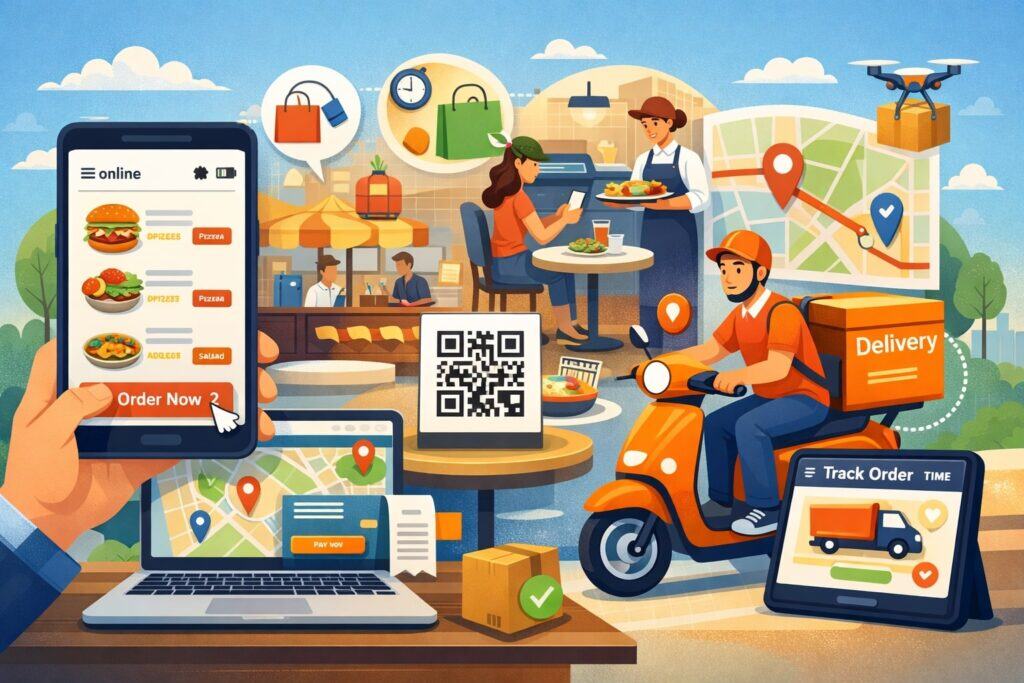
Food cost is one of the biggest controllable expenses in any restaurant. Yet many teams still “manage inventory” with spreadsheets and memory. A capable restaurant management platform should include inventory tools that are usable, fast, and accurate—otherwise teams won’t adopt them.
At minimum, you want recipe-level inventory (theoretical usage), purchase tracking, vendor item mapping, and variance reporting that highlights where you’re losing money.
Strong systems support: ingredient-level recipes, yield adjustments, unit conversions, automated depletion from sales, and easy count workflows (mobile counts, count sheets, par-level guidance).
You should be able to see COGS trends, identify high-variance items, and spot suspicious patterns like unusually frequent voids on high-cost menu items.
Inventory tools should also connect to menu engineering. If an ingredient becomes expensive or unreliable, the platform should help you respond quickly: update pricing, promote alternative items, or temporarily adjust availability across channels. This is not about micromanagement—it’s about protecting margin in a world where costs shift quickly.
AI is becoming a major force here. Modern restaurant operators are increasingly adopting AI-driven forecasting to reduce waste, optimize purchasing, and improve profitability. The direction is clear: inventory systems will keep moving from reactive counting to predictive ordering suggestions and automated variance detection.
Labor Scheduling, Time Tracking, and Smarter Staffing Decisions
Labor is typically the largest operating expense, and it’s the hardest to manage because it changes daily. A strong restaurant management platform should include scheduling, time tracking, and labor analytics that help managers staff correctly—without burning out teams or overspending on slow shifts.
Core features include: drag-and-drop scheduling, role-based templates, availability management, shift swaps with approval rules, overtime alerts, break compliance warnings, time clock controls (PIN, geofencing, manager approvals), and accurate labor cost reporting by daypart.
It should also connect labor to sales in a way that’s easy to interpret, such as labor percentage, sales per labor hour, and productivity metrics by role.
The best systems go beyond reporting and become decision tools. They help you answer questions like: “How many cooks do I need on Tuesdays when online orders spike?” or “Which location consistently overstaffs lunch?”
When scheduling is separate from sales and forecasting, managers guess. When it’s integrated, managers learn.
AI-assisted scheduling is becoming increasingly common. Industry commentary shows AI tools being used to streamline scheduling and reduce labor costs by forecasting demand and optimizing labor allocation.
Kitchen Display System, Prep Timing, and Order Accuracy Controls
A kitchen can’t run efficiently if tickets are inconsistent, unreadable, or poorly paced. That’s why a restaurant management platform should support strong kitchen execution tools—especially a Kitchen Display System (KDS) that improves speed and accuracy.
A good KDS should: route tickets to the right stations, display modifiers clearly, support coursing and hold-fire logic, and track ticket times. It should handle both dine-in pacing and takeout urgency without overwhelming the line.
Features like color-coded timing thresholds, bump bars or touchscreen bumps, and station-level timing analytics help teams identify bottlenecks.
Order accuracy is not just a service issue—it’s a profit issue. Wrong orders create remakes, refunds, bad reviews, and churn. A restaurant management platform should include controls that prevent avoidable mistakes: modifier rules (forcing selections when required), allergen flags, and item availability locks.
For example, if you run out of a product, you should be able to mark it unavailable across POS and online ordering instantly, preventing guests from ordering something you can’t deliver.
Modern POS and restaurant operations trend discussions often highlight speed and accuracy improvements through POS and workflow integration. The same principle applies to kitchen execution: integrating ordering, routing, and timing into one system produces measurable operational gains.
Menu Management, Modifiers, and Pricing Controls at Scale
Menu management is where restaurants either gain control—or lose it. A high-quality restaurant management platform must make menu updates fast, consistent, and safe across all channels. That means one item database, consistent modifier groups, and rules that prevent pricing chaos.
Key capabilities: nested modifiers, forced modifiers, upcharges, combo logic, size variants, half-and-half options, and item-specific tax rules.
If you run multiple locations, you need centralized updates with approval workflows and the ability to apply changes selectively. You also need “effective dates” so you can schedule menu changes in advance without scrambling on launch day.
Pricing control is especially important in a cost-volatile environment. The platform should support price tiers (e.g., delivery vs. pickup vs. dine-in if needed), promotions with time rules, and detailed discount reporting so you understand what promotions actually do to margin.
A forward-looking restaurant management platform should also support experimentation: A/B testing promos, tracking item performance over time, and integrating with reporting that shows contribution margin by item—not just sales volume.
Guest Experience Features: Loyalty, CRM, and Personalization
A restaurant’s growth is often driven by repeat guests, not first-time visitors. That’s why a restaurant management platform should support guest engagement features that help you build relationships—not just process transactions.
At minimum, the platform should capture guest data ethically and usefully: email/phone (with consent), visit frequency, favorite items, channel preference (dine-in vs. pickup), and feedback signals.
Loyalty should be simple for guests and simple for staff: points, tiers, rewards, and frictionless redemption. The platform should also support targeted offers—like “weekday lunch reward” or “bounce-back for lapsed guests.”
CRM matters because broad discounts are expensive. Personalized offers can be more efficient: they drive repeat visits without giving away margin unnecessarily. Restaurant industry commentary for 2025 emphasizes loyalty and data-driven personalization as a major success driver.
Be careful: guest engagement tools must be integrated. If loyalty lives in a separate app that doesn’t connect cleanly with your POS and ordering, staff will avoid it and guests will abandon it.
Reporting, Analytics, and Dashboards That Drive Action
Reporting is where many platforms fail—not because they lack data, but because they don’t present it in a way that helps operators act quickly. A strong restaurant management platform should provide real-time dashboards and clear reports for owners, managers, and supervisors.
You need core reporting: sales by channel, category, and item; labor cost trends; comps and voids; discounts; payment mix; tips; and peak periods. But you also need operational reporting: ticket times, order accuracy indicators, fulfillment speed, and staffing efficiency.
The platform should support alerts and exceptions. Instead of forcing managers to dig through dozens of reports, the system should flag abnormal patterns: sudden refund spikes, unusual void activity, labor running hot, inventory variance anomalies, or delivery wait times exceeding targets.
Analytics should also support strategic decisions: menu engineering, staffing models, location comparisons, and profitability by channel. Delivery sales might look great on paper but be unprofitable after fees—your restaurant management platform should help you see the whole picture.
Payments, Tips, and Compliance-Ready Security
Payments are central to restaurant operations, and security expectations keep rising. A modern restaurant management platform should support flexible payment methods (tap-to-pay, digital wallets, gift cards, split tenders) while also minimizing risk.
Security isn’t optional. Restaurants are targets for cybercriminals because they process payments and store operational data. Industry coverage continues to emphasize the growing consequences of breaches and ransomware for restaurants and hospitality businesses.
Your platform should support tokenization, encryption, and strong access controls, plus logs and audit trails. It should also help you maintain payment security standards.
For example, PCI DSS v4.0 introduced updated requirements with future-dated items becoming mandatory by March 31, 2025—making compliance planning a real operational concern for payment environments in the United States.
Tip management matters too. A strong restaurant management platform should handle tip pools, tip reporting, and role-based tip rules cleanly, and should export accurate data for payroll. It should also support controls that reduce disputes: time-stamped edits, manager approvals, and clear reporting.
Integrations and Open APIs That Prevent Vendor Lock-In
No single vendor does everything best forever. That’s why a restaurant management platform should provide a strong integration ecosystem and reliable APIs, allowing you to connect best-in-class tools for accounting, payroll, marketing, reservations, delivery logistics, catering, and more.
The key is quality, not quantity. You want integrations that are stable, supported, and bi-directional where it matters (menu sync, order injection, payment reconciliation, labor exports). Ask whether integrations are officially supported, how often they break, and how quickly the vendor fixes issues.
A platform should also support webhooks and developer tools for custom workflows. For example: sending real-time sales data to a BI system, triggering marketing messages after specific events, or syncing inventory counts to purchasing tools.
Multi-Location Controls, Franchise Support, and Centralized Governance
If you operate more than one location—or plan to grow—you need features that support scale. A scalable restaurant management platform should provide centralized governance without crushing local flexibility.
This includes: location grouping, role-based permissions across locations, standardized menus with local overrides, multi-location reporting, and centralized promo control. Franchise operators often need additional capabilities: enforcing brand standards, auditing compliance, tracking franchise royalties, and comparing KPIs across franchisees.
Multi-location inventory and purchasing also matters. You may want consolidated vendor management, cross-location transfers, and centralized item catalogs. The platform should also support location-level differences in taxes, labor rules, and operational workflows.
Reliability, Offline Mode, and Support That Saves Your Friday Night
A restaurant management platform must be dependable. Downtime during a rush is not a minor inconvenience—it’s lost revenue, chaos, and guest frustration. Look for platforms that provide reliable uptime, fast failover options, and an offline mode that allows basic operations if the internet drops.
Offline mode should support at least: taking orders, storing them locally, processing payments in a limited capacity (where permitted), and syncing once connectivity returns. Even if you rarely use it, it’s insurance.
Support is equally critical. You need responsive support during service hours, not just business hours. You also want onboarding, training resources, and a clear path to resolve issues. For multi-unit operators, account management and escalation procedures matter.
FAQs
Q.1: What is the most important feature in a restaurant management platform?
Answer: The most important feature is end-to-end operational integration. A restaurant management platform that unifies POS, online ordering, kitchen execution, inventory, labor, and reporting reduces errors and creates a consistent workflow.
Without integration, teams waste time reconciling systems, and managers make decisions using incomplete information. The “best” single feature depends on your model (quick service vs. full service vs. multi-unit), but integration is the foundation that makes every other feature work effectively.
Q.2: How do I know if a restaurant management platform is scalable?
Answer: Scalability shows up in centralized controls, stable integrations, and multi-location governance features. If a restaurant management platform supports centralized menu management, multi-location reporting, role-based permissions across locations, and consistent operational workflows, it’s built for growth.
Also evaluate reliability: strong uptime, offline capabilities, and responsive support. Platforms that struggle at one location will struggle more as you expand.
Q.3: Do I need AI features in a restaurant management platform right now?
Answer: You don’t need “AI branding,” but you do need the capabilities AI improves—forecasting, scheduling optimization, inventory prediction, and anomaly detection. Industry discussions in 2025 repeatedly highlight AI as a growing operational advantage for restaurants, especially for labor and inventory efficiency.
A good approach is choosing a restaurant management platform that is already adding practical AI tools or has a roadmap that aligns with real operational needs, not gimmicks.
Q.4: What security features should I demand from a restaurant management platform?
Answer: Demand tokenization, encryption, strong access controls, audit logs, and clear compliance support. Restaurants face real cybersecurity risks, including phishing and ransomware impacts in hospitality environments.
Also ask how the vendor supports evolving payment security standards like PCI DSS v4.0 and what they provide to help you meet requirements.
Q.5: Can one restaurant management platform replace all my tools?
Answer: Sometimes, but not always. Many restaurants do best with a core restaurant management platform plus a few specialized tools (accounting, advanced marketing automation, reservations).
The key is integration quality. If the platform has a strong ecosystem and open APIs, you can build a stack that fits your workflow without creating disconnected systems.
Conclusion
The best restaurant management platform is the one that improves execution today and adapts to tomorrow. Start with operational fundamentals—unified POS, multi-channel ordering, inventory, labor, kitchen execution, guest engagement, and analytics. Then evaluate the platform’s ability to scale: integrations, multi-location controls, reliability, and support.
Technology trends point toward more automation and predictive decision-making. AI is increasingly used for scheduling, forecasting, inventory optimization, and smarter operations, while security expectations continue rising alongside payment and data protection requirements.
When you invest in a restaurant management platform, you’re not buying software—you’re building an operating system for your business. Choose one that reduces chaos, improves consistency, strengthens margins, and gives your team tools they actually want to use.
That’s how a restaurant management platform becomes a competitive advantage rather than just another monthly bill.