
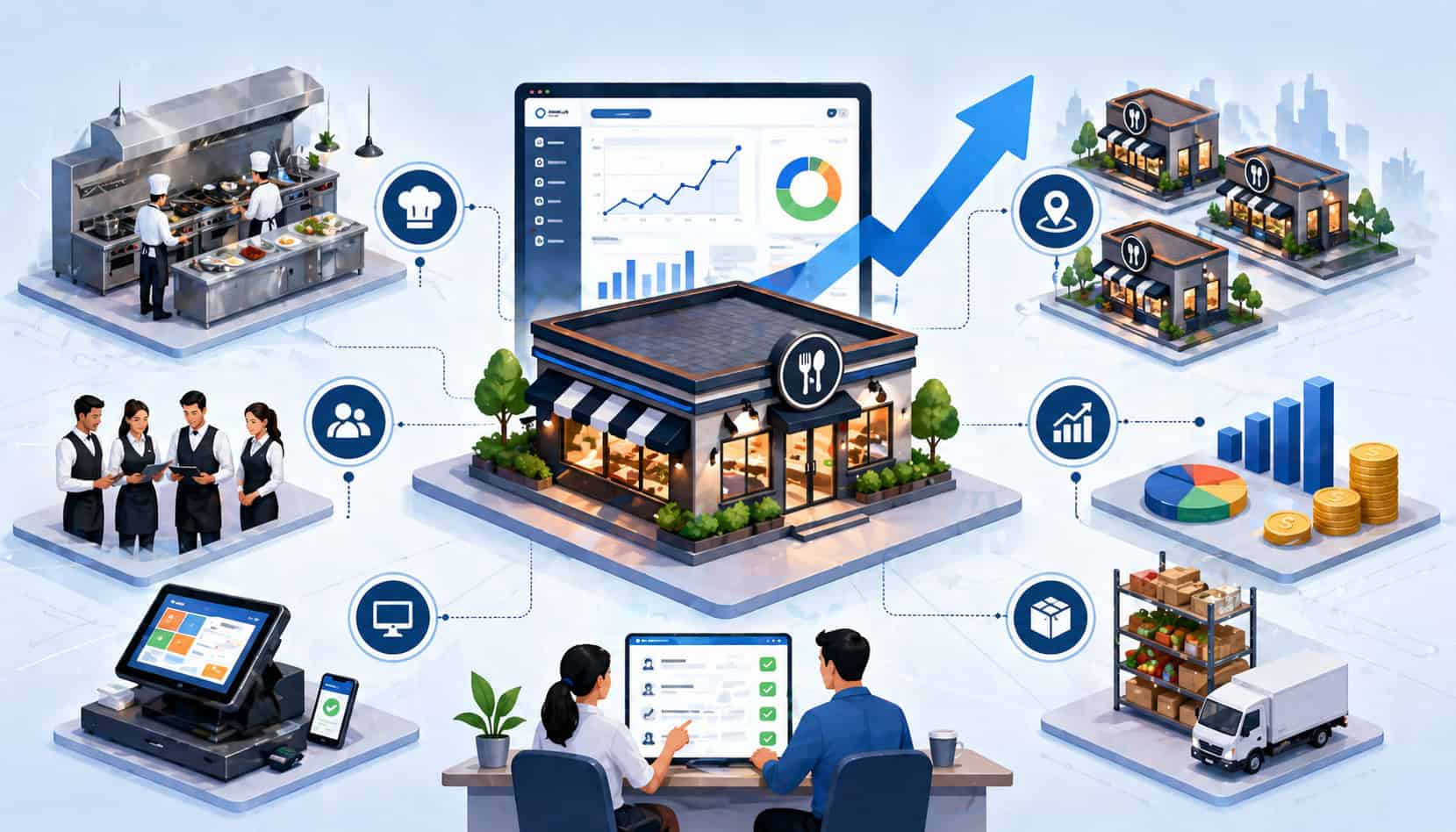
Scaling a restaurant is not just about opening another location, adding more staff, or serving more guests. Growth creates pressure on every part of the business: food quality, labor scheduling, inventory, purchasing, reporting, communication, training, customer experience, and cost control.
Without strong systems, growth often turns small problems into daily chaos. A recipe that worked in one kitchen becomes inconsistent across three. A manager who “just knows what to do” cannot be copied into every location. A supplier issue that used to be manageable can suddenly affect the entire operation.
To Build a Scalable Restaurant Operations System, you need repeatable processes, reliable tools, clear responsibilities, and data that helps managers make better decisions. The goal is not to make the restaurant feel rigid. The goal is to create enough structure so teams can perform consistently, even as the business grows.
A scalable restaurant operations system helps you:
- Maintain food quality across shifts and locations
- Reduce waste, stockouts, and over-ordering
- Train employees faster and more consistently
- Improve communication between front-of-house, back-of-house, and leadership
- Track labor, food cost, sales, and performance in one place
- Open new locations without rebuilding operations from scratch
What Is a Scalable Restaurant Operations System?
A scalable restaurant operations system is the combination of processes, people, technology, and performance controls that allow a restaurant to grow without losing consistency. It gives owners and managers a clear way to run daily operations, measure results, and repeat what works.
In a single-location restaurant, many decisions may happen informally. The chef may know how much to prep. The general manager may know who performs best on busy shifts. The owner may know which supplier to call when stock runs low. That can work for a while, but it becomes fragile when the business grows.
Scalability means the operation can handle more volume, more employees, more menu complexity, or more locations without depending on memory, guesswork, or constant owner involvement. A strong restaurant operations management system turns daily work into documented workflows.
This includes standard operating procedures, inventory controls, staff training systems, reporting dashboards, recipe standards, purchasing rules, communication routines, and accountability structures. Together, these elements create a restaurant workflow system that supports consistent execution.
A scalable restaurant operations system does not remove flexibility. Managers still need judgment. Chefs still need skill. Service teams still need hospitality. The system simply gives everyone a shared foundation, so quality does not depend on who happens to be working that day.
Why Restaurants Struggle to Scale Operations
Restaurants often struggle to scale because they grow faster than their systems. The first location may succeed because of strong leadership, loyal staff, and hands-on ownership. But when the same restaurant tries to expand, informal habits are no longer enough.
One common issue is inconsistent processes. Different managers may handle ordering, prep, cleaning, scheduling, or guest recovery in different ways. At first, this may seem harmless. Over time, it creates uneven food quality, unpredictable costs, and confusion among employees.
Poor communication is another major barrier. When information lives in group chats, paper notes, verbal reminders, or disconnected spreadsheets, important details get missed. A vendor substitution, low-stock item, staffing change, or menu update may reach one location but not another.
Manual workflows also limit growth. If managers spend hours entering invoices, counting stock, building schedules, or preparing reports by hand, they have less time to coach staff and improve performance. Manual work also increases the risk of errors.
Inventory problems can become especially expensive during growth. Without real-time visibility, restaurants may over-order, run out of key ingredients, miss price changes, or fail to notice waste patterns. For more detail on inventory structure, this guide to cloud food inventory management is a useful supporting resource.
Restaurants also struggle when reporting is weak. If leadership cannot see food cost, labor cost, sales trends, waste, recipe margins, and location performance clearly, decisions become reactive. Scaling requires timely data, not end-of-month surprises.
Core Components of a Scalable Restaurant Operations System
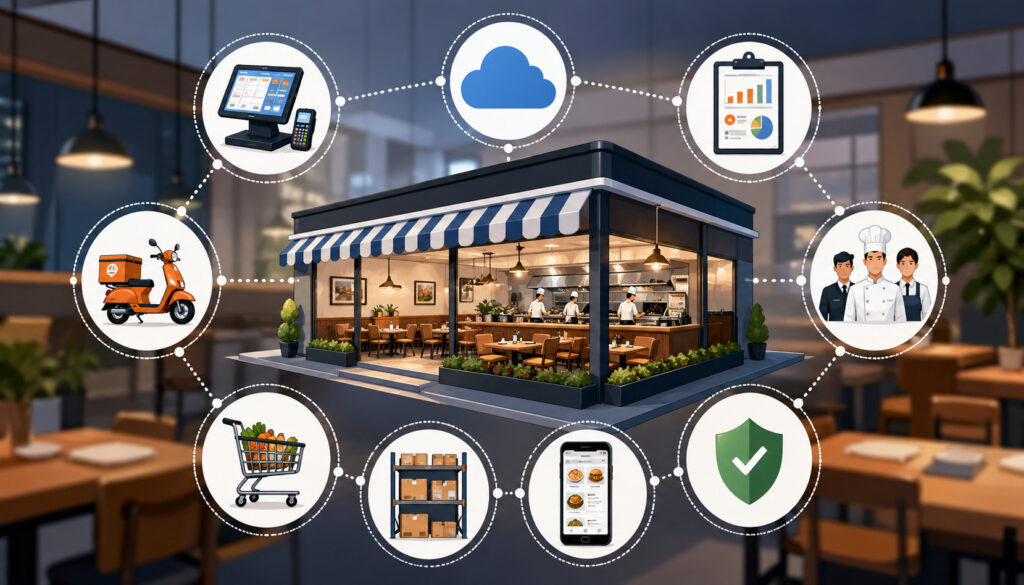
A scalable restaurant operations system is built from several connected parts. Each part supports consistency, accountability, and efficiency. When these components work together, restaurant leaders can reduce complexity while increasing control.
The most important components include SOPs, inventory systems, training programs, recipe standards, purchasing workflows, reporting tools, communication routines, labor planning, and regular performance reviews. None of these should operate in isolation.
For example, recipe standards affect purchasing. Purchasing affects inventory. Inventory affects food cost. Food cost affects menu profitability. Menu profitability affects growth decisions. A strong restaurant operations system setup connects these areas so managers are not solving the same problems repeatedly.
The table below shows the foundation of a scalable system.
| Component | What It Covers | Why It Matters |
| SOPs | Opening, closing, prep, service, cleaning, safety, cash handling | Creates consistency across shifts and locations |
| Recipe Standards | Ingredients, portions, prep steps, plating, yield | Protects food quality and controls cost |
| Inventory System | Counts, usage, waste, ordering, supplier tracking | Reduces stockouts, waste, and over-ordering |
| Training Program | Onboarding, role expectations, skill development | Helps employees perform consistently |
| Technology Stack | POS, inventory, scheduling, reporting, communication | Reduces manual work and improves visibility |
| Reporting System | Sales, labor, food cost, waste, guest feedback | Supports better decisions |
| Communication Process | Shift notes, updates, manager logs, issue escalation | Prevents confusion and missed information |
| Audits and Reviews | Brand standards, cleanliness, service, compliance | Keeps operations aligned as the business grows |
A scalable restaurant operations system should be simple enough for teams to use every day. If the system is too complicated, employees will work around it. The best systems are clear, practical, and built into the normal rhythm of restaurant work.
Standard Operating Procedures (SOPs)
Standard operating procedures are the backbone of restaurant process standardization. SOPs explain how important tasks should be completed, who is responsible, when they should happen, and what the finished result should look like.
In restaurants, SOPs should cover daily operational tasks such as opening procedures, closing procedures, prep lists, line setup, cleaning schedules, receiving deliveries, temperature checks, cash handling, service recovery, and end-of-shift reporting.
Good SOPs are specific without being overwhelming. A vague instruction like “clean the kitchen” is not enough. A better SOP explains which surfaces must be cleaned, which chemicals to use, who signs off, and when the task must be completed.
SOPs also protect the guest experience. When every shift follows the same service standards, guests receive a more consistent experience regardless of location, manager, or team. That consistency is essential for restaurant growth systems.
Inventory and Supply Chain Systems
Inventory and supply chain systems help restaurants control stock levels, purchasing, waste, and food cost. As a restaurant grows, inventory cannot depend on rough estimates or last-minute ordering.
A scalable inventory system should track ingredients, usage, par levels, supplier pricing, purchase orders, receiving, transfers, waste, and variance. For multi-location restaurant operations, centralized visibility becomes even more important because leadership needs to compare performance across locations.
Supplier management is also part of scalability. Restaurants should know approved vendors, backup suppliers, contract terms, delivery schedules, minimum order requirements, and product substitutions. This reduces disruption when demand increases or supply changes.
Modern restaurant efficiency systems often use real-time inventory tracking to connect sales with ingredient depletion. This helps managers see what is being used, what is running low, and where waste is occurring. For a deeper operational breakdown, see this resource on real-time food inventory tracking.
Staff Training and Role Clarity
A restaurant cannot scale if every employee learns differently. Training must be repeatable, measurable, and tied to clear role expectations.
Role clarity means each team member understands what they own. A kitchen manager should know their responsibilities for prep, ordering, waste review, food safety, and labor coordination. A shift lead should know when to escalate issues. A server should know service standards, side work, and guest recovery steps.
Training should include onboarding checklists, station training, shadowing, skills verification, manager sign-off, and ongoing coaching. This creates a consistent employee experience and reduces performance gaps.
Strong staff training also supports retention. Employees are more confident when they know what success looks like. Managers spend less time correcting confusion and more time developing people.
Step-by-Step Guide to Build a Scalable Restaurant Operations System
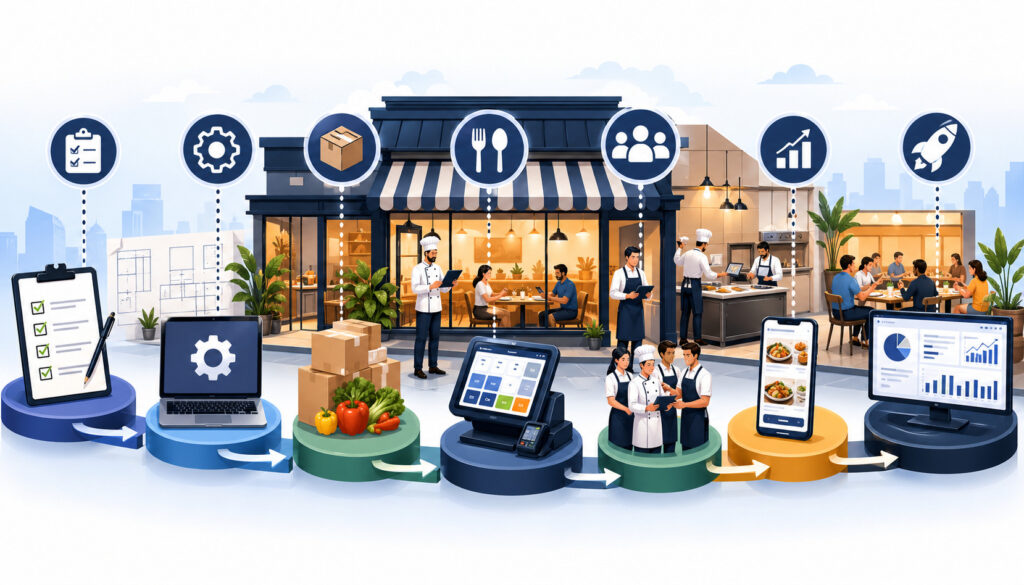
To Build a Scalable Restaurant Operations System, start by organizing the work that already happens every day. Most restaurants do not need to invent everything from scratch. They need to capture what works, improve what does not, and turn best practices into repeatable systems.
The best approach is gradual and structured. Trying to overhaul everything at once can overwhelm managers and staff. Instead, focus on the highest-impact areas first: core processes, menu execution, technology, data, training, and accountability.
A practical restaurant operations system setup should answer these questions:
- What must happen every day?
- Who is responsible for each task?
- What standard should be followed?
- How is completion verified?
- What data should be reviewed?
- What happens when performance falls short?
- How will the system improve over time?
This roadmap helps restaurants scale operations with less confusion and more control.
Step 1: Document Every Core Process
Start by mapping the daily workflows that keep the restaurant running. This includes kitchen prep, ordering, receiving, storage, service setup, line checks, cleaning, scheduling, cash handling, reporting, and manager handoffs.
Do not begin with a perfect manual. Begin with observation. Watch how tasks are actually completed during busy and slow periods. Ask managers and employees where mistakes happen most often.
Once you identify the core workflows, document them in a consistent format. Each process should include the purpose, owner, steps, tools needed, timing, quality standard, and verification method.
For example, a receiving process should explain who checks deliveries, how invoices are matched, how temperatures are verified, where items are stored, and how discrepancies are reported.
Step 2: Standardize Recipes and Menu Execution
Recipe standardization is essential for consistent food quality and cost control. Every menu item should have a documented recipe, portion size, prep method, yield, plating guide, allergen notes, and approved substitutions.
Without recipe standards, the same dish may cost more or taste different depending on who prepares it. That creates inconsistent guest experiences and unpredictable margins.
Standardized recipes also support training. New cooks can learn faster when expectations are clear. Kitchen managers can spot variance more easily when actual usage does not match expected usage.
Menu execution should also include prep sheets, batch guides, shelf-life rules, holding standards, and plating photos where useful. These details help maintain consistency during rush periods.
For inventory and recipe control, this guide on setting up kitchen inventory management can support the setup process.
Step 3: Implement the Right Technology Stack
Technology helps restaurants reduce manual work and improve accuracy. A scalable technology stack may include POS, inventory software, scheduling tools, accounting integration, reporting dashboards, vendor ordering, task management, and communication platforms.
The key is integration. If systems do not talk to each other, managers may still waste time entering the same information in multiple places. A connected restaurant automation system can link sales, inventory, purchasing, labor, and reporting.
For example, POS data can help forecast demand, update ingredient usage, and identify high-margin menu items. Inventory software can trigger low-stock alerts and help managers avoid over-ordering. Scheduling tools can compare labor hours against sales trends.
When evaluating technology, focus on operational fit. A system should be easy for managers to use, flexible enough for growth, and reliable during peak service. This resource on integrating POS with inventory software explains how connected systems support better visibility.
Step 4: Centralize Data and Reporting
Centralized reporting gives owners and operators visibility across the business. Without it, each location may operate in its own bubble, making it difficult to compare performance or identify problems early.
Important reports include sales by daypart, labor percentage, food cost, inventory variance, waste, voids, discounts, guest feedback, ticket times, and manager notes. These reports should be reviewed regularly, not only when problems appear.
For multi-location restaurant operations, central dashboards help leadership identify patterns. One location may have higher waste. Another may have stronger lunch sales. Another may be struggling with labor scheduling. Centralized data makes these differences visible.
Reporting should lead to action. If food cost is high, managers should review recipe compliance, purchasing, waste, theft risk, portion control, and pricing. Data is only useful when it improves decisions.
Technology’s Role in Scaling Restaurant Operations
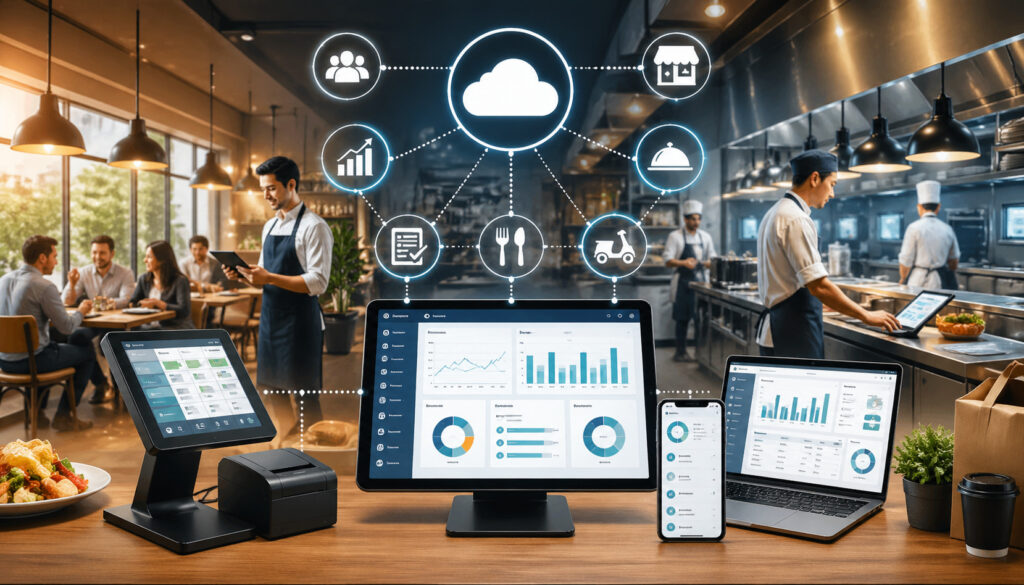
Technology plays a major role in building restaurant efficiency systems because it reduces repetitive work, improves accuracy, and gives managers faster access to information. However, technology should support operations, not replace leadership.
A strong restaurant operations management system often includes several connected tools. The POS captures sales. Inventory software tracks stock and usage. Scheduling software manages labor. Reporting dashboards show trends. Communication tools keep teams aligned.
When these systems are integrated, managers can make better decisions. They can see which menu items are selling, which ingredients are running low, which shifts are overstaffed, and which locations need support.
Restaurant automation systems are especially useful for recurring tasks. Automated low-stock alerts, purchase order suggestions, recipe costing, sales reports, and labor dashboards can save managers hours each week. This gives them more time for coaching, guest experience, and operational improvement.
Technology also supports accountability. If a task is assigned, tracked, and reviewed, it is less likely to be forgotten. If inventory counts are visible, discrepancies can be investigated sooner. If sales and labor data are updated quickly, managers can adjust before the week is already lost.
Still, technology should be introduced carefully. Staff need training, managers need clear expectations, and leadership must define how each tool will be used. A system only works when people trust it and use it consistently.
How to Maintain Consistency Across Multiple Locations
Multi-location restaurant operations require a balance between central control and local execution. Each location may have different staff, guest patterns, kitchen layouts, and sales volumes, but the brand experience should remain consistent.
Start with centralized standards. Recipes, menu specs, service expectations, cleaning checklists, training materials, purchasing rules, and reporting formats should be shared across all locations. This creates a common operating language.
Centralized purchasing can help control cost and product quality. Approved supplier lists, negotiated pricing, standard product specifications, and purchasing workflows reduce variation. Locations may still need some flexibility, but the core system should be consistent.
Regular audits are also important. Audits should review food quality, cleanliness, safety, service standards, inventory accuracy, cash handling, and brand compliance. The goal is not to punish teams. The goal is to identify gaps and support improvement.
Performance benchmarks help compare locations fairly. Track key metrics such as food cost, labor cost, waste, sales growth, guest satisfaction, ticket times, and employee turnover. When one location performs well, study its practices and share them across the group.
Communication routines are essential. Weekly manager meetings, shift logs, issue reports, and leadership updates help prevent locations from operating in isolation.
Common Mistakes When Scaling Restaurant Operations
One of the biggest mistakes restaurants make is scaling too quickly. Opening a new location before the first one has stable systems can multiply existing problems. If food cost, training, inventory, or management routines are weak, expansion usually makes them worse.
Another mistake is skipping SOPs. Some owners assume experienced managers will figure things out. While experienced managers are valuable, they still need consistent standards. Without SOPs, every location may develop its own version of the brand.
Restaurants also fail to scale when they underinvest in training. New employees need more than a quick walkthrough. They need structured onboarding, station practice, performance feedback, and clear expectations.
Relying too heavily on manual processes is another common issue. Spreadsheets, paper checklists, and verbal updates may work temporarily, but they often break down as volume increases. Manual systems are harder to audit and easier to ignore.
Many restaurants also fail to track the right data. Sales alone do not show operational health. A restaurant may be busy but still unprofitable if labor, waste, discounts, or food cost are uncontrolled.
Finally, some restaurants build systems once and never update them. Operations change as menus, staff, suppliers, and guest expectations evolve. Scalable systems need regular review.
Best Practices for Long-Term Scalability
Long-term scalability comes from continuous improvement. A restaurant operations system should not be treated as a one-time project. It should be reviewed, tested, and improved as the business changes.
Start with regular operational reviews. Weekly reviews may focus on sales, labor, inventory, waste, guest feedback, and staffing needs. Monthly reviews can examine menu performance, supplier pricing, training gaps, and location comparisons.
Invest in leadership development. Scalable restaurants need managers who can coach teams, read reports, solve problems, and protect standards. A strong general manager or kitchen manager can make systems work in real life.
Keep documentation current. SOPs, recipes, training materials, and checklists should be updated when processes change. Outdated documentation creates confusion and weakens trust in the system.
Use data to guide decisions, but do not ignore team feedback. Employees often notice operational friction before it appears in reports. Encourage managers and staff to suggest improvements.
Build accountability without creating fear. Teams should understand expectations, receive feedback, and have the tools to improve. Accountability works best when standards are clear and support is available.
Finally, simplify where possible. A scalable restaurant operations system should reduce complexity, not create unnecessary paperwork. The best systems make the right actions easier to repeat.
FAQs
What is a scalable restaurant operations system?
A scalable restaurant operations system is a structured way to manage restaurant processes so the business can grow without losing consistency, quality, or control. It includes SOPs, recipe standards, inventory systems, staff training, reporting, communication routines, and technology tools.
How do you scale restaurant operations?
To scale restaurant operations, start by documenting core processes, standardizing recipes, training staff consistently, and using systems for inventory, labor, purchasing, and reporting. The goal is to create repeatable workflows that can support more volume, more employees, or multiple locations.
What systems are needed to grow a restaurant?
Restaurants need systems for SOPs, recipe management, inventory, purchasing, scheduling, training, POS reporting, food cost control, communication, and performance reviews. These systems help create consistency and make daily operations easier to manage as the business grows.
Why do restaurants fail to scale?
Restaurants often fail to scale because they grow before their systems are ready. Common issues include inconsistent processes, weak staff training, poor inventory control, manual reporting, unclear roles, and lack of operational visibility.
How can technology help scale restaurant operations?
Technology helps scale restaurant operations by reducing manual work, improving accuracy, and giving managers better visibility into sales, labor, inventory, food cost, and performance. Integrated tools can connect POS data, inventory usage, purchasing, scheduling, and reporting.
What role do SOPs play in scalability?
SOPs create consistency by explaining how important tasks should be completed, who is responsible, when they should happen, and how success is measured. They are essential for food prep, service, cleaning, receiving, opening, closing, safety checks, and manager reporting.
How do you maintain consistency across locations?
Consistency across locations comes from standardized recipes, shared SOPs, centralized purchasing, structured training, regular audits, and common performance benchmarks. These practices help each location follow the same operational standards.
When should a restaurant invest in operations systems?
A restaurant should invest in operations systems before growth creates daily problems. Warning signs include inconsistent food quality, frequent stockouts, rising waste, unclear staff responsibilities, slow training, weak reporting, and manager burnout.
Conclusion
To Build a Scalable Restaurant Operations System, restaurants need more than ambition. They need structure. Growth becomes sustainable when daily work is documented, recipes are standardized, inventory is controlled, staff are trained, and managers have reliable data.
Scalability does not come from adding more pressure to the same people. It comes from building restaurant workflow systems that help teams perform consistently. With the right processes, technology, communication, and accountability, restaurants can grow without sacrificing food quality, guest experience, or profitability.
A scalable restaurant operations system gives owners and managers the confidence to expand because the business is no longer dependent on guesswork. It runs on clear standards, strong training, useful reporting, and continuous improvement.