
- Cloud Restaurant Manager vs Square
Compare Restaurant Management Software and POS Solutions
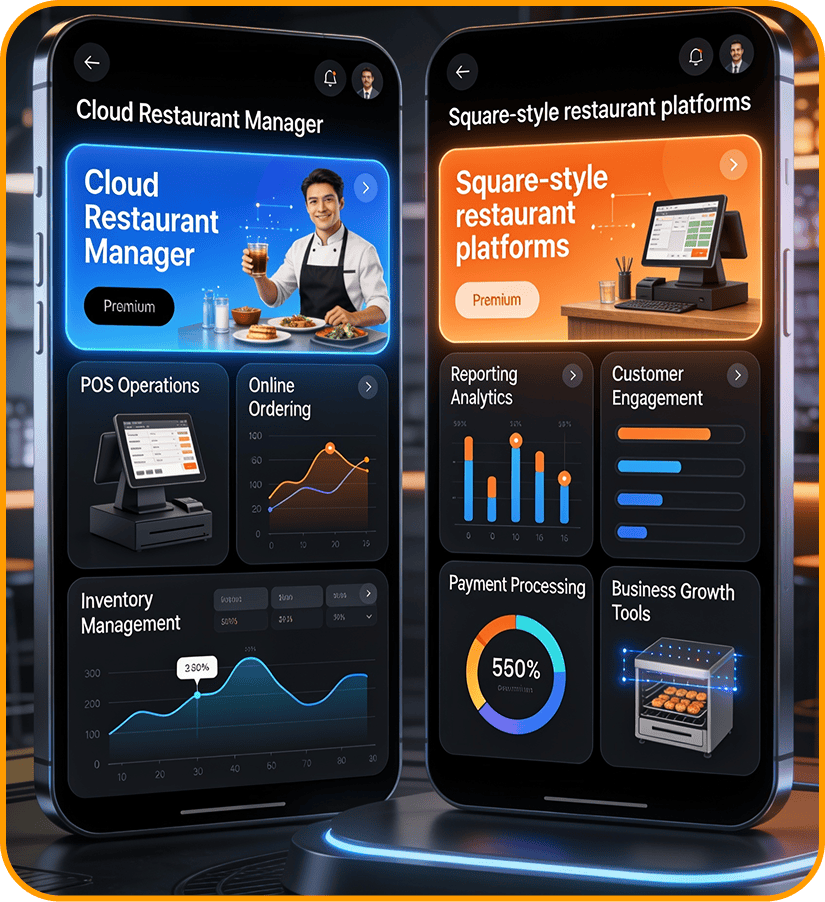
Restaurant operators evaluating software often compare Cloud Restaurant Manager and Square to understand how each platform supports restaurant operations, online ordering, inventory management, reporting, customer engagement, payment processing, and business growth.
- Why Restaurants Compare
Square Is Known for Simplicity, Restaurants Often Need Operational Depth
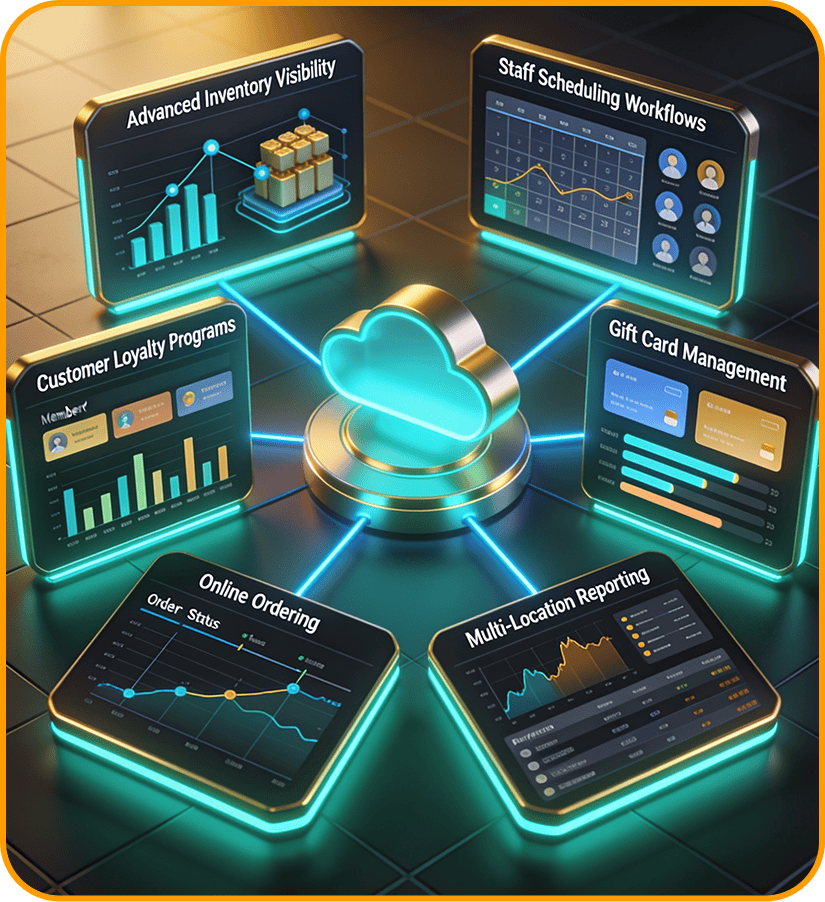
- Advanced restaurant inventory visibility
- Connected staff scheduling workflows
- Restaurant-specific reporting and operations
- Customer loyalty and gift card management
- Quick Comparison Table
Cloud Restaurant Manager vs Toast at a Glance
workflow preferences, operational requirements, business objectives, and software value.
Category
Cloud Restaurant Manager
Square
- Feature Breakdown
Key Areas Restaurants Should Compare
handles the real situations that happen during service, management, and growth.
Service Workflow Control
Look at how smoothly the platform supports counter service, table service, takeout, delivery, order edits, modifiers, refunds, discounts, and checkout flow during busy restaurant hours.
Back-of-House Visibility
Compare how managers monitor ingredient usage, low-stock situations, purchasing needs, waste patterns, and stock movement so operational decisions are not based on guesswork.
Digital Ordering Experience
Review how online orders connect with menus, pickup timing, delivery preparation, customer notifications, kitchen workflows, and order history without creating extra manual work.
Guest Retention Tools
Evaluate how each platform helps restaurants understand customer behavior, encourage repeat visits, manage rewards, support gift cards, and build stronger guest relationships.
Management Reporting
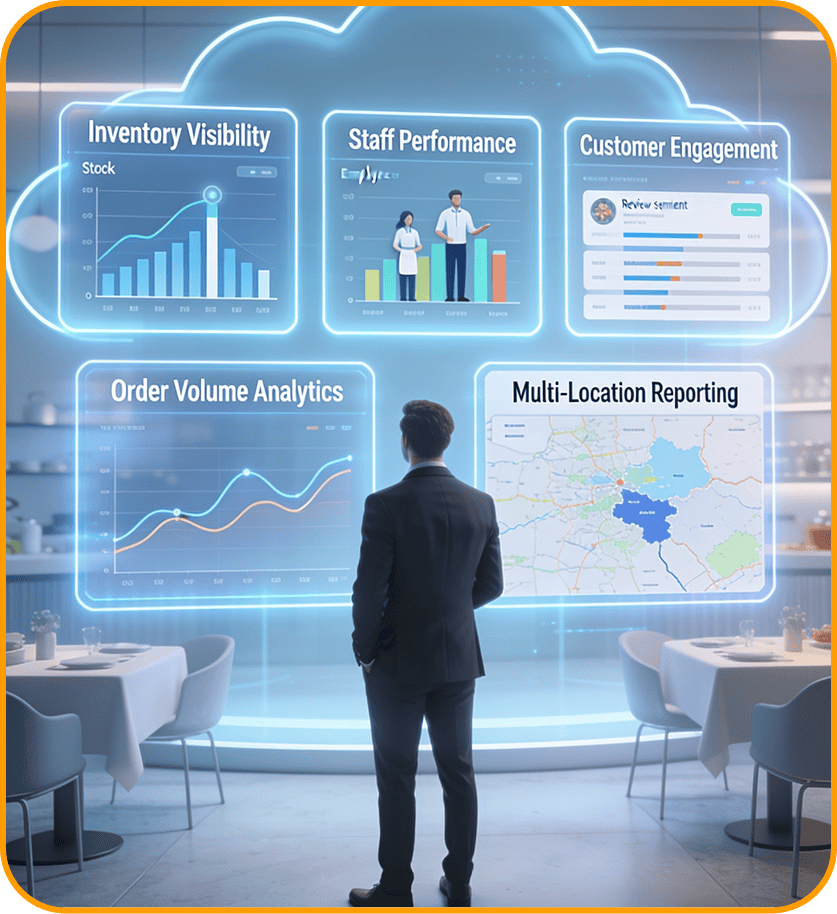
Compare whether reporting gives restaurant owners meaningful visibility into sales trends, labor activity, inventory usage, customer patterns, order channels, and location performance.
Growth Readiness
Review how well the software can support more staff, more orders, more locations, centralized menu control, brand consistency, and stronger operational oversight as the restaurant grows.
- Cost & Value
Restaurant Software Value Is More Than Basic Transactions
- Best Fit
Which Platform Fits Your Restaurant?
requirements, operational complexity, and growth objectives.
Cloud Restaurant Manager May Be a Good Fit For Restaurants Seeking
Restaurant-specific management tools, inventory visibility, staff scheduling, online ordering, customer loyalty programs, multi-location management, payment processing support, and connected reporting in one platform.
Square May Be a Good Fit For Businesses Seeking
Payment acceptance tools, transaction management, business operations software, and simpler workflows for businesses that prioritize straightforward payment and POS functionality.
- Cloud Restaurant Manager Advantage
Connected Restaurant Workflows
Through One Platform
- Restaurant POS software
- Restaurant inventory management
- Employee scheduling
- Customer engagement
- Reporting and analytics
- Multi-location management
Operational Efficiency
Growth Support
- Migration & Switching
Moving from Square to Cloud Restaurant Manager
Review current POS and payment workflows
Compare restaurant inventory and reporting needs
Evaluate online ordering and customer engagement tools
Plan multi-location visibility and growth support
Move toward connected restaurant operations
Explore the Cloud Restaurant Manager
vs Square Comparison
reporting and analytics, payment processing, and multi-location management through a restaurant-focused
platform built to support operational efficiency and long-term growth.