
- Restaurant Reporting & Analytics Software
Powerful Reporting & Analytics for Modern Restaurants
Cloud Restaurant Manager provides dashboards for sales, labor costs, inventory usage, menu performance, customer trends, and location-level reporting.
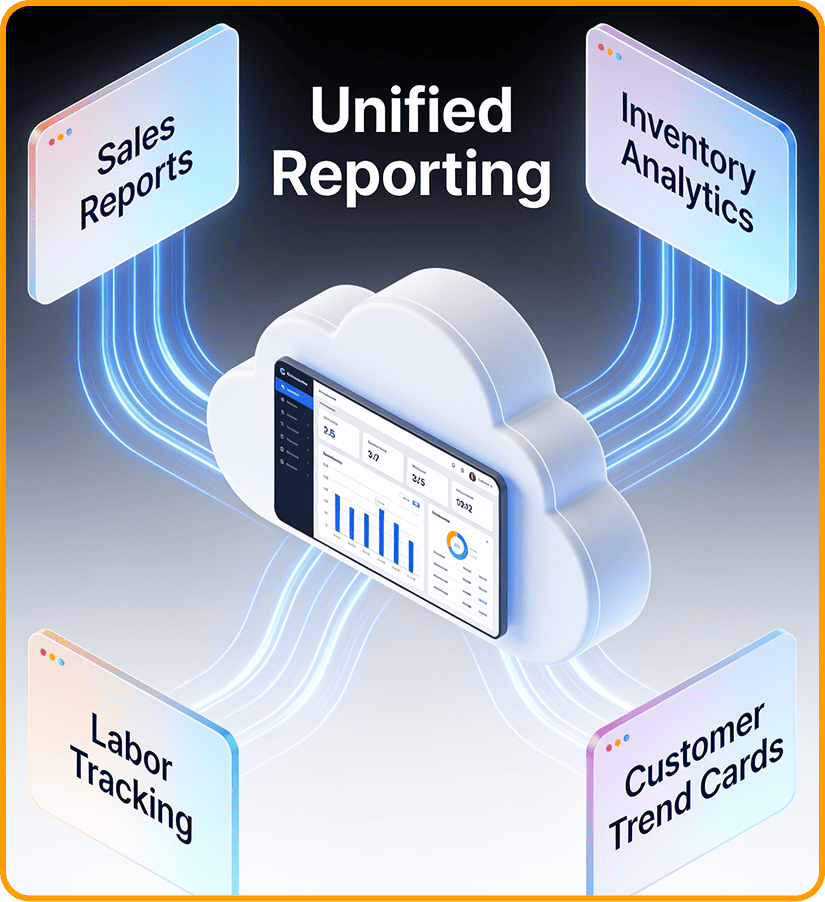
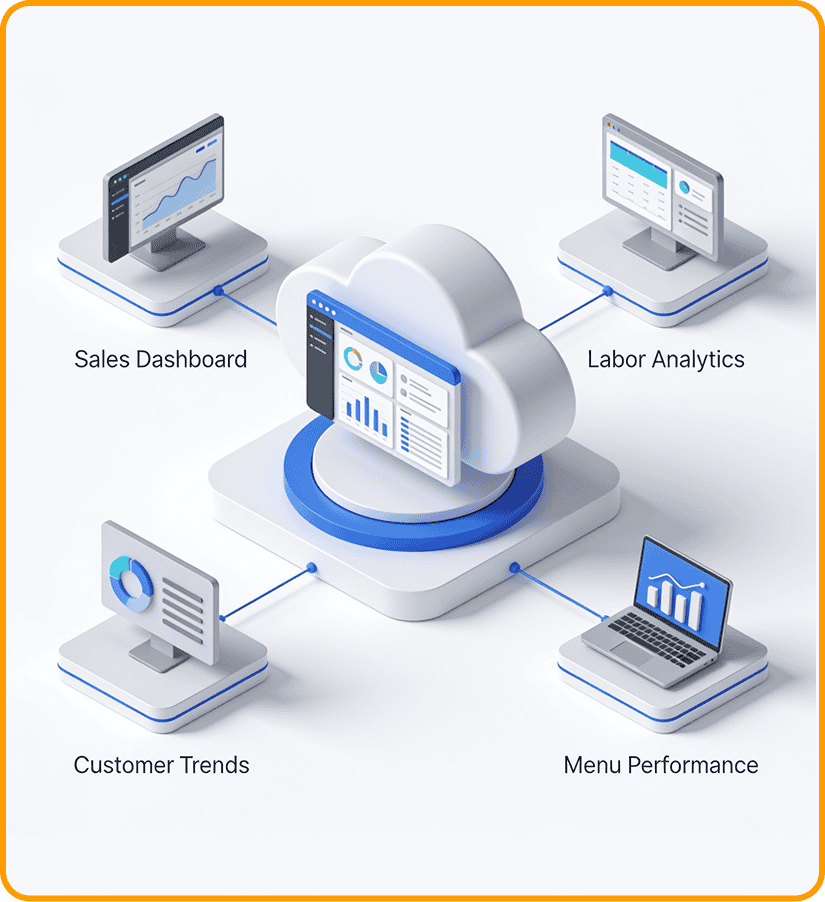
- Operational Visibility
Restaurant Decisions Should Be Based on Real Data
- Sales dashboards
- Inventory usage reports
- Customer trend visibility
- Labor cost insights
- Menu performance tracking
- Location-level reporting
- Business Insights
Track the Numbers That Shape
Restaurant Performance
analytics, inventory reporting, menu insights, and location comparisons.
Sales Dashboards
Monitor revenue, transaction volume, order value, peak hours, and day-to-day sales movement.
Labor Insights
Review labor costs, staffing patterns, attendance signals, and workforce productivity trends.
Menu Performance
Identify best-selling items, underperforming dishes, and menu opportunities that affect profitability.
Location Reporting
Compare performance across locations and understand how each restaurant contributes to growth.
- Sales and Cost Control
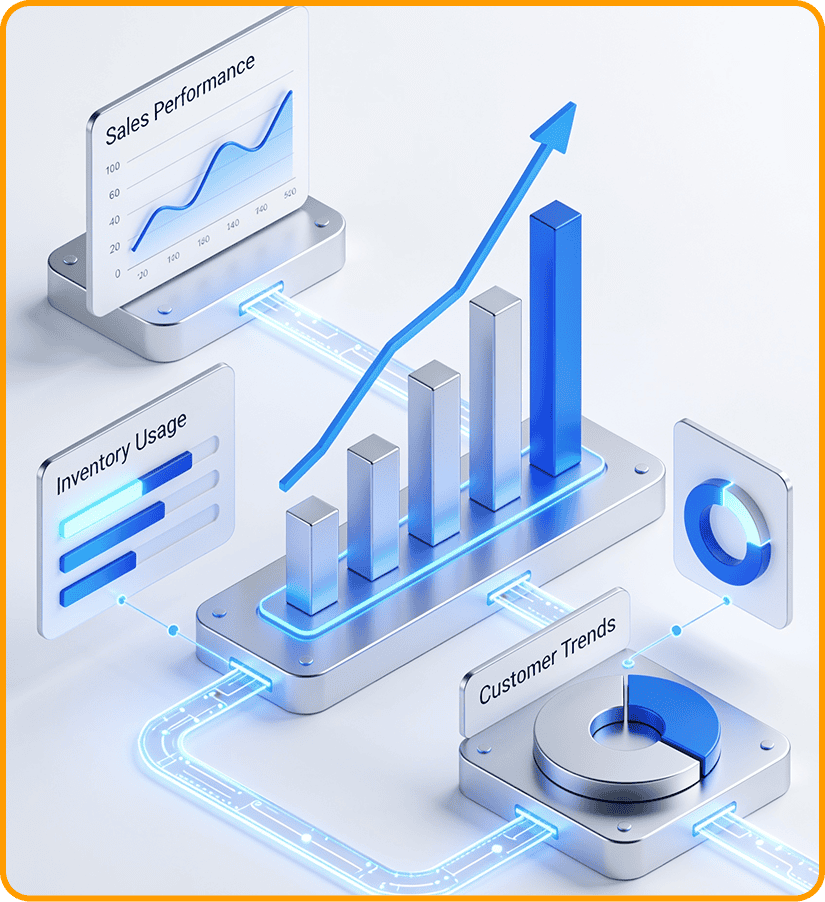
Connect Revenue, Labor, and Inventory Data
Sales Performance
Understand daily revenue, order trends, busy periods, and sales growth opportunities.
Inventory Usage
Review how ingredient movement and waste patterns connect to food cost management.
Customer Trends
Track repeat activity, ordering behavior, and demand patterns that support better marketing decisions.
- Analytics Workflow
From Daily Activity to Smarter Decisions
organizes important performance signals so managers can understand what happened and what needs attention.
Collect Operational Data
Sales, labor, inventory, customer, menu, and location activity flows into reporting dashboards.
Review Key Metrics
Managers analyze restaurant sales reports, labor costs, item performance, and usage patterns.
Identify Trends
Teams spot busy periods, cost changes, customer behavior, and menu performance opportunities.
Improve Operations
Owners use reporting insights to adjust staffing, purchasing, promotions, and growth decisions.
- Performance Clarity
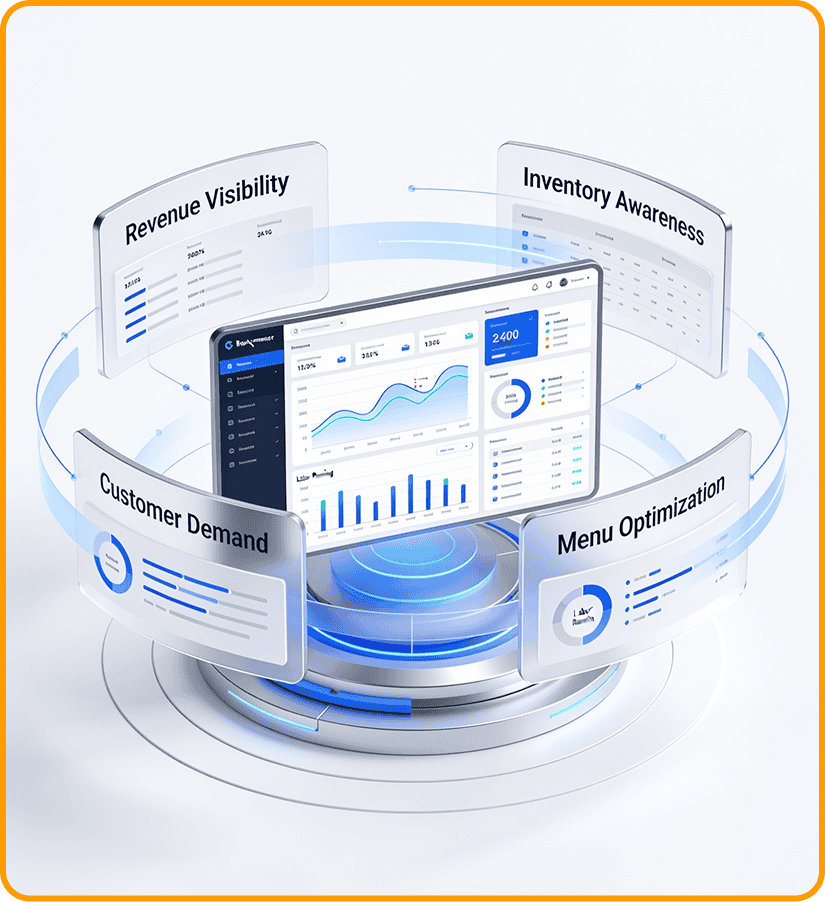
See What Is Working and Where Improvements Are Needed
- Better revenue visibility
- Stronger inventory awareness
- Customer demand visibility
- Improved labor planning
- Menu optimization insights
- More confident business decisions
- Why Restaurants Choose Us
Restaurant Analytics Software
Built for Real Operators
reports. The platform turns operational activity into clear insight that supports better decisions across every area of the business.
Actionable Dashboards
Review the numbers that matter most without sorting through complicated reports.
Cost Visibility
Understand how labor, inventory, discounts, and food usage affect profitability.
Menu Intelligence
Identify top-performing items, slow sellers, and opportunities for better pricing or promotions.
Location Comparison
Compare performance across multiple restaurants and identify operational differences.
- Built for Growth
Restaurant Data Analytics That Scales With Your Operation
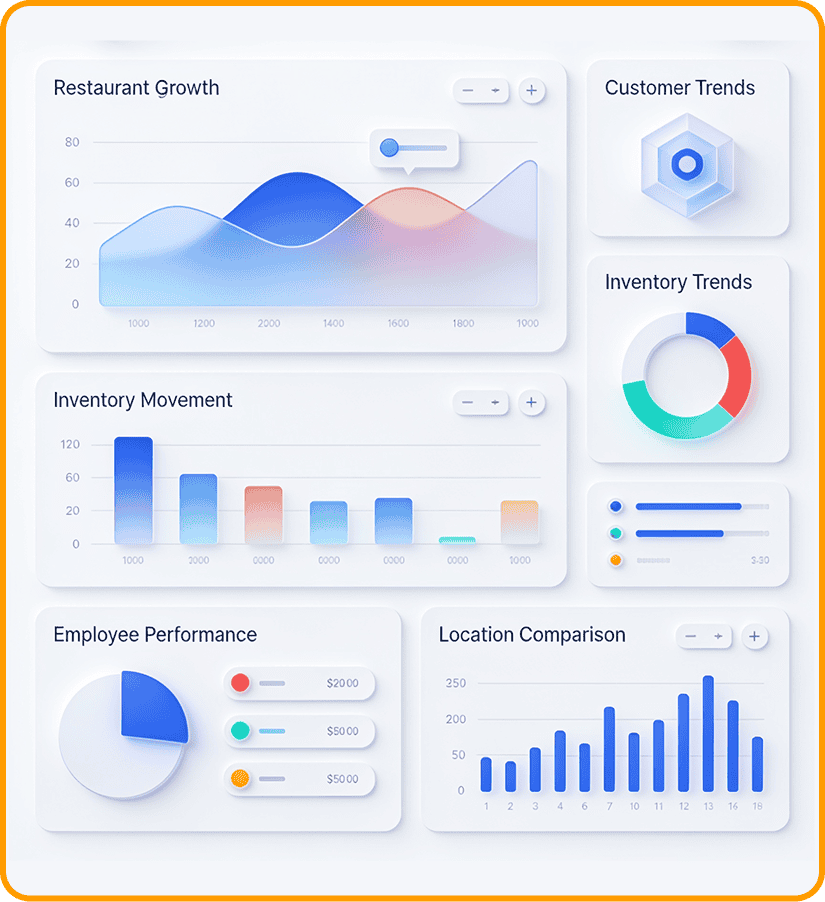
Make Smarter Restaurant Decisions
with Clear Analytics
performance, customer trends, and location reporting with powerful Restaurant Reporting & Analytics Software.